Plant Science and Technology

Dec. 17, 2023
CAFNR Students Selected as Missouri Farm Bureau Ambassadors
Madison Meyer, sophomore plant sciences major, and Caleb Simpson, freshman agribusiness management major, were named the 2024 Missouri Farm Bureau Ambassadors at the 109th Missouri Farm Bureau annual meeting at the Lake of the Ozarks during the first weekend in December.

Dec. 17, 2023
CAFNR Student Award Gilman Scholarship to Study Abroad
Carlee Long, senior in agribusiness management, and Kenny Henk, sophomore in plant sciences, have received the Benjamin A. Gilman International Scholarship from the U.S. Department of State's Bureau of Educational and Cultural Affairs.
Dec. 13, 2023
CAFNR Senior Spotlight – Q&A with William Lee
Get to know plant science and technology senior William Lee.

Dec. 10, 2023
Ivair Valmorbida
Research areas include: Educational background…

Dec. 3, 2023
Sushil Chhapekar
Dr. Sushil’s key focus is to dissect and characterize the novel loci/genes through gene editing and to develop functional markers to assist genomics-assisted breeding for nematode resistance. His goal is to enhance the understanding of molecular aspects of plant-nematode interaction and translate this knowledge to provide new genetic resources for limiting the impact of nematodes in the northern and southern regions of the U.S. Throughout his research discoveries, he develops genomes, transcriptome, miRNAome for important stress and nutraceutical traits in major crop species and characterized the gene functions. He is implementing high throughput technologies including single-cell RNA-sequencing and gene…

Dec. 3, 2023
Michelle Brooks
Michelle serves as an instructor for several courses within the Division of Plant Sciences & Technology, with a focus on the Horticultural Science and Design emphasis area. She is a strong advocate for experiential learning, and her courses incorporate laboratory components that provide students with hands-on experience in the campus greenhouses. Prior to assuming her instructor role, Michelle served for 28 years as the Plant Growth Facilities Coordinator for CAFNR’s greenhouse facilities. Drawing on her extensive experience in greenhouse operations and plant production, she currently provides primary faculty oversight for the Ashland Road Greenhouse Facility, which houses the…
Nov. 21, 2023
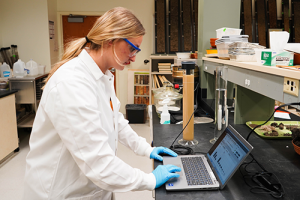
Office of the Provost’s Grant for Classroom Improvement enhances soils lab experience
Soils labs in the School of Natural Resources have been upgraded to prepare students to work in the lab and in the field.

Nov. 20, 2023
Hong An
Educational background…

Nov. 14, 2023
Nazir Ahmad
Educational background…

Nov. 10, 2023
Q&A with first-generation student Lidia Myers
In honor of National First-Generation Student Week, Lidia Myers, senior plant science major from Fredericktown, Missouri, discusses her experience as a first-generation college student.