Biochemistry

June 29, 2021
Jaapna Dhillon
Educational background…

June 29, 2021
Craig Schenck
To deal with relentless environmental pressures, plants produce an arsenal of structurally diverse defensive chemicals. These sometimes-complex compounds are derived from much simpler building blocks from primary metabolic pathways. Unlike well-documented diversification of plant specialized metabolic enzymes, core metabolic pathways are highly conserved and evolutionarily constrained because they serve essential metabolic functions, which makes manipulation of these pathways difficult. The expansion and alteration of core metabolism has given rise to the evolution of structurally diverse plant specialized metabolites. However, the underlying mechanisms enabling metabolic diversity and the connections linking core to specialized metabolism are not well known. These…

Dec. 10, 2020
So-Yon Park
Host-Parasitic plant interaction is a fascinating model to study Plant-Plant interaction. Park is interested in how mobile RNAs and proteins are exchanged, transferred, and functional in other organisms through the host-parasite interaction. Cuscuta (stem parasitic plant) and Phelipanche (root parasitic plant) growing on Arabidopsis, tomato, and soybean are major parasites used in Park lab. We are also interested in how small RNAs are transported and suppress target genes under drought stress in soybeans. Educational Background B.S., Dankook University, South KoreaPh.D., Seoul National University, South Korea…

Sep. 6, 2019
Lloyd W. Sumner
The research focus of the Sumner lab includes the development of cutting-edge technologies for large-scale biochemical profiling of plant metabolites (i.e. metabolomics) and integrating these with other omics data. These technologies are then applied in a symbiotic manner for plant gene discovery, gene characterization and the elucidation of mechanistic responses to external stimuli; especially related to plant specialized metabolism or plant natural products biosynthesis. Technology enables the biology and the biology drives technology development. Current technology development projects include the development of a sophisticated and integrated ensemble including UHPLC-MS-SPE-NMR for the systematic and biologically driven annotation of plant metabolomes.

Sep. 6, 2019
Jay J. Thelen
Educational background Courses taught…

Sep. 6, 2019
Scott C. Peck
Educational background Courses taught…

Sep. 6, 2019
Lesa J. Beamer
Educational background Courses taught…

Sep. 5, 2019
John J. Tanner
Educational background…

Sep. 5, 2019
Michael S. Chapman
Structural Virology – Host Interactions: The US Food & Drug Administration has now approved two gene replacement therapies: Luxturna™ (2017), a treatment for congenital blindness and Zolgenesma™ (2019) for spinal muscular atrophy (SMA). 1,500 SMA infants have now been treated for this debilitating and fatal genetic disorder. These, and treatments for hemophilia and other diseases, use recombinant rAAV vectors to deliver DNA to afflicted cells. Our structure-function analyses provide a fundamental understanding of the atomic interactions key to cell entry, trafficking, and immune neutralization. These foundations are needed for the engineering of gene therapy vectors that are efficient and…
Sep. 5, 2019
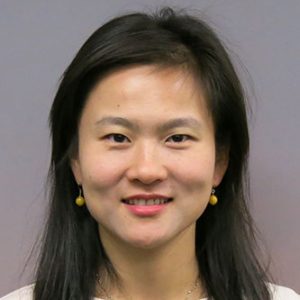
Xiao Heng
The 5′-cap of HIV-1 incompletely spliced mRNAs undergoes hypermethylation by the host trimethylguanosine synthase, resulting in the formation of a trimethylguanosine (TMG) cap. Disrupting this process markedly diminishes HIV infectivity, as the TMG-cap enables the viral RNA to access a specialized translation pathway, ensuring sustained viral protein synthesis when the host’s global translation pathway is dampened in response to the stress induced by pathogen invasion. Our lab focuses on characterizing the RNA structures and molecular interactions necessary for the cap epigenetic modification, using a variety of biophysical techniques including NMR spectroscopy, cryoEM, small angle X-ray scattering and isothermal titration…
- « Previous
- 1
- 2
- 3
- 4
- Next »