Stories
Oct. 18, 2021
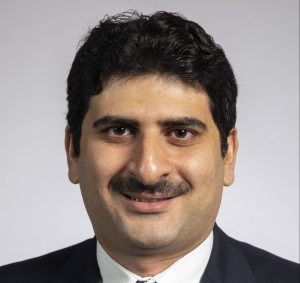
Ahmed Balboula Receives Outstanding Investigator Award
Ahmed Balboula, assistant professor in animal sciences, is working to understand how chromosome segregation is regulated in female gametes (oocytes). During the early stages of pregnancy, chromosome mis-segregation can result in aneuploidy (abnormal number of chromosomes in a cell), the leading genetic cause of miscarriages and congenital abnormalities. His work has implications for both animal and human health. Balboula recently received R35 grant (Outstanding Investigator Award) through the National Institute of General Medicine (NIGMS, NIH) totaling $1.9 million for a five-year period. Funding is for a project titled Mechanisms Underpinning Meiotic Spindle Formation and Behavior. Balboula…
Sep. 27, 2021
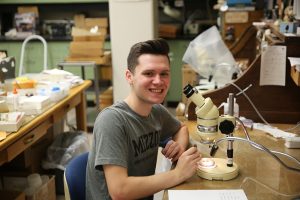
Taking a Chance
As a freshman, Mason Ward took a chance and applied to the Freshman Research in Plants (FRIPS) Program with the thought that he would give research a try. Ward wasn’t sure if research would be a major part of his collegiate career, but figured by pushing himself he would certainly learn something new. Now, three years later, Ward’s extraordinary research portfolio has earned him two undergraduate research awards from the Entomological Society of America (ESA). Ward earned the Undergraduate Student Achievement in Entomology award from the Plant-Insect Ecosystem (P-IE) section of the ESA, as well as…
Aug. 30, 2021
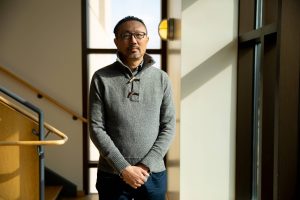
Solving Problems Through Research
As an alum of the University of Missouri (MU), Chung-Ho Lin has worked for his alma mater his entire career in the College of Agriculture, Food and Natural Resources (CAFNR) in the School of Natural Resources. In that time, he’s become known as a problem solver of sorts, when it comes to a wide variety of research questions. Lin, who is a research associate professor in forestry, is also the lead scientist in charge of bioremediation and natural products research programs at the Center for Agroforestry. Bioremediation is a process used to treat contaminated media like water, soil and other…
Aug. 29, 2021
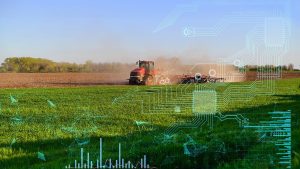
MU Plays Crucial Role in New NSF Artificial Intelligence Institute
The U.S. National Science Foundation (NSF) has announced the establishment of the AI Institute for Resilient Agriculture (AIIRA), one of 11 new NSF National Artificial Intelligence Research Institutes that will work to advance AI technologies and their associated benefits to society. The AIIRA will be led by Iowa State University (ISU) and feature collaboration across eight institutions, including the University of Missouri. While the 11 AI Institutes will cover a wide range of AI technology and applications, the AIIRA will focus on a simulation technology that can create “digital twins” of real-world crops and farms, an approach that would provide…
Aug. 29, 2021
Cattle Losing Adaptations to Environmental Stressors, MU Researchers Find
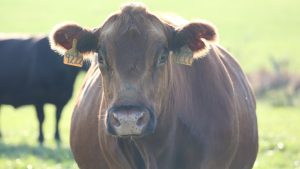
As a fourth-generation cattle farmer, Jared Decker knows that cattle suffer from health and productivity issues when they are taken from one environment–which the herd has spent generations adapting to–to a place with a different climate, a different elevation or even different grass. But as a researcher at the University of Missouri, Decker also sees an opportunity to use science to solve this problem, both to improve the welfare of cattle and to plug a leak in a nearly $50 billion industry in the U.S. “When I joined MU in 2013, I moved cattle from a family farm in New…
Aug. 29, 2021
Unconscious Biases can Drive Foodborne Illness Outbreaks, MU Researchers Find
In the midst of a pandemic that has claimed more than 2 million lives worldwide and disrupted nearly every facet of society since it appeared more than a year ago, understanding the factors that create and facilitate disease outbreaks is more important than ever. Now, researchers at the University of Missouri have determined that cognitive biases — patterns of errors in thinking that affect judgments and behaviors, often unconsciously — can help create and worsen foodborne disease outbreaks. Harvey James believes studying unconscious biases can help researchers learn how outbreaks are born. “Unethical behavior isn’t always…
Aug. 29, 2021
Piecing Together the Puzzles of Bird Genomes
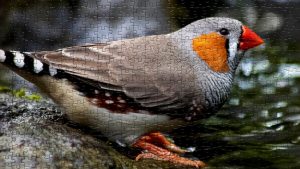
In 2003, scientists finished sequencing the entire human genome, paving the way for new discoveries about genetic disorders and the numerous ways that genes influence behavior, health and other traits. But the importance of a complete genome for scientific reference is not limited to humans — researchers are now engaged in an all-out push to assemble the genomes of vertebrates across the animal kingdom, racing to unlock the secrets behind the genetic origins of unusual behaviors and the evolution of devastating diseases. In a flagship paper recently featured on the cover of Nature, more than 100 researchers worldwide contributed groundbreaking research to…
July 28, 2021
Studying Variable Rate Technology
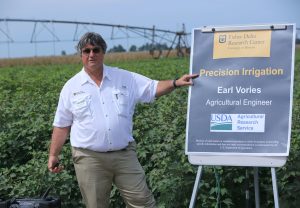
Earl Vories has been researching variable rate irrigation in cotton fields at the Fisher Delta Research Center.
June 30, 2021
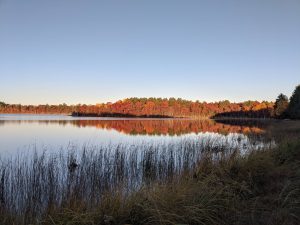
Studying Oxygen Levels in Lakes Around the World
A recent study shows that oxygen levels in temperate lakes around the world are declining rapidly, a trend that is largely driven by warming temperatures that threatens freshwater biodiversity and drinking water quality. Rebecca North, assistant professor of limnology in the University of Missouri (MU) College of Agriculture, Food and Natural Resources (CAFNR), took part in a world-wide study, which used data from over 400 lakes around the world, looking at oxygen levels. Of the 400 lakes studied, data from 30 reservoirs in the state of Missouri were used. The paper, titled Widespread Deoxygenation of Temperate Lakes,…
June 24, 2021
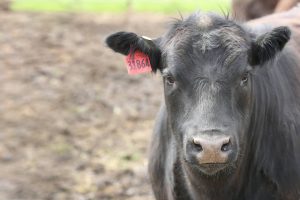
Supporting Future Scientists
Two postdoctoral fellows in the Division of Animal Sciences have received Lalor Foundation fellowships in the past three years.