Stories

The University of Missouri College of Agriculture, Food and Natural Resources (CAFNR) is going to dive deeper into regenerative agriculture by forming a new Center for Regenerative Agriculture. While there is no single definition for regenerative agriculture, some key elements of the practice include increasing soil health and biodiversity, integrating a mix of conservation practices, and contributing to overall sustainability and profitability on working farms and ranches. Photo courtesy of Rob Myers.

Jan. 4, 2021

Diving Deeper Into Regenerative Agriculture

The University of Missouri College of Agriculture, Food and Natural Resources (CAFNR) is going to dive deeper into regenerative agriculture by forming a new Center for Regenerative Agriculture. While there is no single definition for regenerative agriculture, some key elements of the practice include increasing soil health and biodiversity, integrating a mix of conservation practices, and contributing to overall sustainability and profitability on working farms and ranches. “We have been fortunate to obtain external funding to support the center, which will foster faculty and student collaboration across the entire college and will support key aspects of our new strategic plan…

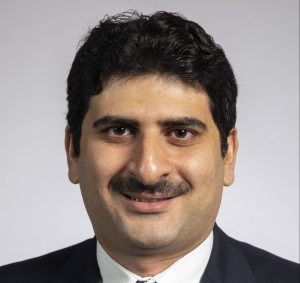
Pavel Somavat joined the University of Missouri College of Agriculture, Food and Natural Resources (CAFNR) Division of Food Systems and Bioengineering (FSB) this year as an assistant professor of food science/biomedical, biological and chemical engineering. Somavat taught courses in food science and researched natural food colors, grain and biomass processing at the University of Texas Rio Grande Valley before joining CAFNR. Somavat was at CCS Haryana Agricultural University before joining the faculty at Rio Grande Valley. Photo courtesy of Pavel Somavat.

Dec. 14, 2020

Working to Benefit Society

Pavel Somavat spent four years teaching electrical engineering at CCS Haryana Agricultural University, a land-grant university located in India. Somavat enjoyed the underlying philosophy and offerings of the land-grant system – and when he had an opportunity to take a faculty position at one of the two land-grant universities in Missouri, he jumped at the chance. Somavat joined the University of Missouri College of Agriculture, Food and Natural Resources (CAFNR) Division of Food Systems and Bioengineering (FSB) this year as an assistant professor of food science/biomedical, biological and chemical engineering. Somavat taught courses in food science and researched natural food…

The agricultural systems management (ASM) program is updating its name to reflect new strategic priorities. The new name change, which went into affect in October, is from ASM to agricultural systems technology (AST).

Dec. 14, 2020

A Strategic Change

It was just a few years after Leon Schumacher joined the University of Missouri that the agricultural mechanization program changed its name to Agricultural Systems Management (ASM). The program, located in the MU College of Agriculture, Food and Natural Resources Division of Food Systems and Bioengineering (FSB), updated its name in the early 1990s to reflect the changing teaching focus, as well as the ever-changing technology. Now, nearly 30 years later, the program is updating its name once again to reflect new strategic priorities. The new name change, which went into effect in October, is from ASM to Agricultural Systems…

Dr. Bill Danforth

Sep. 25, 2020

Remembering the Legacy of Dr. William Danforth

The passing of William H. “Bill” Danforth, M.D., last week at age 94 brought to the spotlight his work in academic administration, medicine and science, and outreach in the St. Louis area. His contributions also can be felt here at the University of Missouri. Dr. Danforth, chancellor emeritus of Washington University, was the founding chairman of the Donald Danforth Plant Science Center (DDPSC). Mizzou, including the Division of Plant Sciences in the College of Agriculture, Food and Natural Resources (CAFNR), and the Interdisciplinary Plant Group (IPG), has had a long partnership with the Donald Danforth Plant Science Center. In 1998…

The United States Department of Agriculture’s (USDA) National Institute of Food and Agriculture (NIFA) recently announced an investment of $6.2 million in animal reproduction research. Nearly $1.5 million of that investment is coming to the University of Missouri College of Agriculture, Food and Natural Resources’ (CAFNR) Division of Animal Sciences. A total of 14 awards were handed out to 11 institutions, with CAFNR earning three of the awards.

July 27, 2020

An Investment in Animal Reproduction Research

The United States Department of Agriculture’s (USDA) National Institute of Food and Agriculture (NIFA) recently announced an investment of $6.2 million in animal reproduction research. Nearly $1.5 million of that investment is coming to the University of Missouri College of Agriculture, Food and Natural Resources’ (CAFNR) Division of Animal Sciences. A total of 14 awards were handed out to 11 institutions, with CAFNR earning three of the awards. “This is an incredible achievement and showcases how strong our Division of Animal Sciences continues to be,” said Shibu Jose, associate dean in the CAFNR Office of Research. “We’re proud of each…

The Center for Agroforestry’s Chung-Ho Lin, an associate research professor, and his lab are currently looking at how to redirect its analytical capacity (reverse-transcription and real-time qPCR) for the detection and quantification of COVID-19 in food, water and air – and develop mitigation techniques to reduce community exposure to COVID-19.

May 4, 2020

Contributing to Research

For more than 20 years, the Center for Agroforestry at the University of Missouri, has served as one of the world’s leading centers contributing to the science underlying agroforestry, which is the science and practice of intensive land-use management combining trees and shrubs with crops or livestock. Agroforestry practices help landowners to diversify products, markets and farm income; improve soil and water quality; sequester carbon; reduce erosion, non-point source pollution and damage due to flooding; and mitigate climate change. The Center for Agroforestry’s Chung-Ho Lin, an associate research professor, and his lab are currently looking at how to redirect…

FAPRI released its most recent U.S. Agricultural Market Outlook in March – and has already released an additional report, which presents a preliminary analysis of the impact of the COVID-19 pandemic on agricultural markets in the U.S.

May 4, 2020

Gathering Preliminary Data

The U.S. Agricultural Market Outlook is prepared annually by economists with the Food and Agricultural Policy Research Institute (FAPRI) and MU Agricultural Markets and Policy (AMAP) and is updated each August. FAPRI Director Pat Westhoff said the report gives policymakers, farmers, agribusinesses and the public an overview of the state of the U.S. farm economy. The market projections it contains can be useful to farmers making production choices, to policymakers trying to decide how to respond to agriculture issues, to lenders who must decide whether to make loans and to agribusinesses making investment decisions. FAPRI released its most recent U.S.

Field Day tours

Aug. 30, 2019

An Investment in Agriculture

University of Missouri officials announced today a $6.5 million investment in the Missouri Agricultural Experiment Station of MU’s College of Agriculture, Food and Natural Resources. The investment will enhance the university’s ability to share next-generation agricultural technologies developed by MU researchers with Missouri’s farmers and ranchers. “CAFNR’s world-class animal and plant researchers use these centers to translate research from the laboratory and evaluate its impact under real field conditions,” MU Chancellor Alexander N. Cartwright said. “Because these projects oftentimes include an educational component, our students also use the research centers for essential field studies. Needless to say, these centers are…

MOFLUX tower at Baskett.

June 27, 2019

Throwing New Light on Photosynthesis

In the summer months, Jeff Wood, a biometeorologist in the School of Natural Resources at the University of Missouri, likes to spend his days with his head in the clouds, or at least the canopies of forests. Sometimes starting before dawn and staying until dusk, he uses a 32-meter tall instrument-studded tower at the Missouri Ozark AmeriFlux site (MOFLUX) at the Baskett Wildlife Research and Education Center near Ashland, Missouri, to monitor the “breathing” of the forest. Using tools to measure the flow of carbon dioxide and water from the level of the individual leaf to the entire forest, he…

When completed, the new $28.2 million East Campus Plant Growth Facility, on East Campus Drive across from the Trowbridge Livestock Center, will contain nearly 23,000 square feet of greenhouse space in three ranges, along with more than 9,300 square feet for controlled environment plant growth chambers. Photo courtesy Bill Lamberson/Robert Sharp.

Sep. 25, 2018

A Culture of Collaboration

For nearly 150 years, scientists from the College of Agriculture, Food and Natural Resources at the University of Missouri have contributed to advancements around the globe. Many have heard the story of Charles Valentine Riley, an MU professor and Missouri’s first state entomologist, who saved the French wine industry from decimation by an insect, the grape phylloxera. The aphid had destroyed nearly one-third of French wine grapes in 25 years and threatened to annihilate the entire industry within another decade. Riley’s rescue involved grafting French vines onto resistant American rootstock. Others know that Aureomycin, one of the world’s first antibiotics…