Stories
April 7, 2021
Nudging Landowners and Tenants Toward Environmental and Social Stewardship
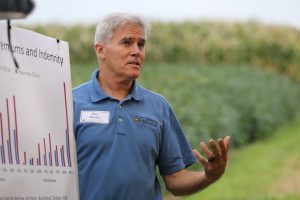
Ray Massey, Extension professor, and Michelle Segovia, assistant professor, both faculty of agricultural and applied economics in the Division of Applied Social Sciences, recently received a grant from USDA’s National Institute of Food and Agriculture (NIFA). The grant is for $498,833 and is titled, “Nudging Landowners and Tenants Toward Environmental and Social Stewardship.” The grant was part of a recent $11.5-million USDA research investment to help ensure America’s small and medium-sized farms become more profitable and improve the quality of life in American farm communities. “The ultimate goal of our project is to promote societal goals by…
April 6, 2021
A Different Perspective
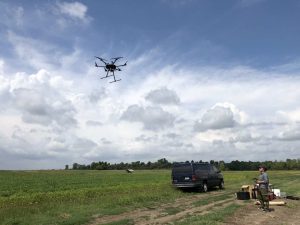
High yield potential is often the top trait crop breeders look at, as higher yielding crops can lead to more money in a producer’s pocket. Researchers in the University of Missouri College of Agriculture, Food and Natural Resources (CAFNR) conduct a variety of trait-related trials through various breeding programs. The Precision and Automated Agriculture Lab (PAAL) in the CAFNR Division of Food Systems and Bioengineering recently teamed up with researchers in the CAFNR Division of Plant Sciences to study yield estimation of soybean breeding lines under drought stress using unmanned aerial vehicle-based imagery and convolutional neural network.
March 17, 2021
Food Innovations to Address Sustainable Development Goal (SDG) 2 – Zero Hunger
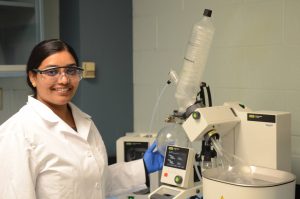
Kiruba Krishnaswamy, assistant professor of food science in the Division of Food Systems and Bioengineering, recently received a VentureWell Faculty Grant that will support a new course that incorporates experiential learning to create innovative solutions in food and agricultural systems. The course will be aligned with the UN Sustainable Development Goal to eradicate hunger. “Students will learn about global challenges in food systems, including chronic hunger and hidden hunger, and learn how to become agents of change through food systems innovation,” Krishnaswamy said. Krishnaswamy was one of 13 recipients from across the United States who were chosen…
Feb. 23, 2021
Raising the Research Profile
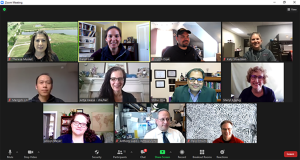
CAFNR Research Council working to promote researchers and projects.
Feb. 16, 2021
Part of the Frontline Discovery Group
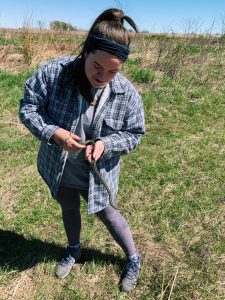
When Lauren Eagon came to the University of Missouri to study natural resource science and management, one of her goals was to complete her own research project. With the help of faculty mentors in the MU College of Agriculture, Food and Natural Resources (CAFNR), Eagon, who is now a senior, has been an active participant in undergraduate research throughout her collegiate career. She has gained hands-on experience through various research projects, where she has partnered with CAFNR faculty, staff and graduate students. She has also accomplished her goal and conducted her own research. “Providing undergraduates with such…
Jan. 3, 2021
Diving Deeper Into Regenerative Agriculture
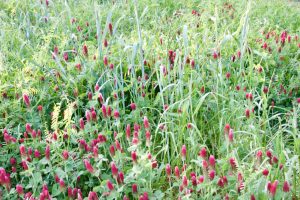
The University of Missouri College of Agriculture, Food and Natural Resources (CAFNR) is going to dive deeper into regenerative agriculture by forming a new Center for Regenerative Agriculture. While there is no single definition for regenerative agriculture, some key elements of the practice include increasing soil health and biodiversity, integrating a mix of conservation practices, and contributing to overall sustainability and profitability on working farms and ranches. “We have been fortunate to obtain external funding to support the center, which will foster faculty and student collaboration across the entire college and will support key aspects of our…
Dec. 13, 2020
Working to Benefit Society
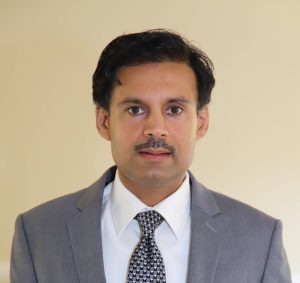
Pavel Somavat spent four years teaching electrical engineering at CCS Haryana Agricultural University, a land-grant university located in India. Somavat enjoyed the underlying philosophy and offerings of the land-grant system – and when he had an opportunity to take a faculty position at one of the two land-grant universities in Missouri, he jumped at the chance. Somavat joined the University of Missouri College of Agriculture, Food and Natural Resources (CAFNR) Division of Food Systems and Bioengineering (FSB) this year as an assistant professor of food science/biomedical, biological and chemical engineering. Somavat taught courses in food science and researched…
Dec. 13, 2020
A Strategic Change
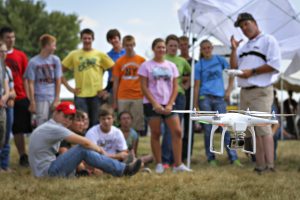
It was just a few years after Leon Schumacher joined the University of Missouri that the agricultural mechanization program changed its name to Agricultural Systems Management (ASM). The program, located in the MU College of Agriculture, Food and Natural Resources Division of Food Systems and Bioengineering (FSB), updated its name in the early 1990s to reflect the changing teaching focus, as well as the ever-changing technology. Now, nearly 30 years later, the program is updating its name once again to reflect new strategic priorities. The new name change, which went into effect in October, is from ASM to…
Sep. 24, 2020
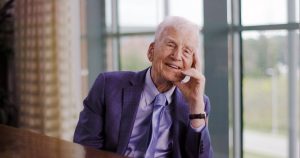
Remembering the Legacy of Dr. William Danforth
The passing of William H. “Bill” Danforth, M.D., last week at age 94 brought to the spotlight his work in academic administration, medicine and science, and outreach in the St. Louis area. His contributions also can be felt here at the University of Missouri. Dr. Danforth, chancellor emeritus of Washington University, was the founding chairman of the Donald Danforth Plant Science Center (DDPSC). Mizzou, including the Division of Plant Sciences in the College of Agriculture, Food and Natural Resources (CAFNR), and the Interdisciplinary Plant Group (IPG), has had a long partnership with the Donald Danforth Plant Science Center.
July 26, 2020
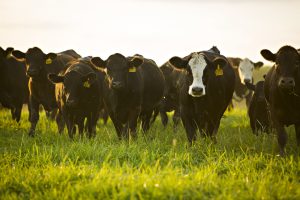
An Investment in Animal Reproduction Research
The United States Department of Agriculture’s (USDA) National Institute of Food and Agriculture (NIFA) recently announced an investment of $6.2 million in animal reproduction research. Nearly $1.5 million of that investment is coming to the University of Missouri College of Agriculture, Food and Natural Resources’ (CAFNR) Division of Animal Sciences. A total of 14 awards were handed out to 11 institutions, with CAFNR earning three of the awards. “This is an incredible achievement and showcases how strong our Division of Animal Sciences continues to be,” said Shibu Jose, associate dean in the CAFNR Office of Research. “We’re proud…