Evergreen
Nov. 6, 2018
Pat Westhoff Named to Howard Cowden Professorship
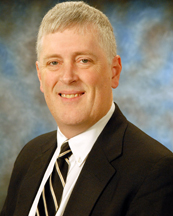
Pat Westhoff has been named as the newest holder of the Howard Cowden Professorship. Dr. Westhoff is a professor of agricultural and applied economics, and the director of the Food and Agricultural Policy Research Institute (FAPRI) at MU. His contribution to agricultural policy is critical to agricultural cooperatives and their member-owners in Missouri and across the nation. Dr. Westhoff and his FAPRI colleagues also work regularly with congressional staffers and USDA leaders to evaluate proposed agricultural legislation intended to provide farmers with a solid economic footing. The professorship is named for Howard Cowden, a southwest Missouri native who started his cooperative career with…
Sep. 24, 2018
A Culture of Collaboration
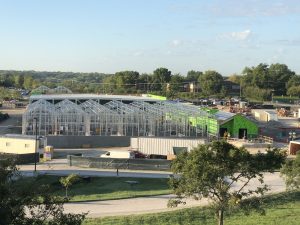
For nearly 150 years, scientists from the College of Agriculture, Food and Natural Resources at the University of Missouri have contributed to advancements around the globe. Many have heard the story of Charles Valentine Riley, an MU professor and Missouri’s first state entomologist, who saved the French wine industry from decimation by an insect, the grape phylloxera. The aphid had destroyed nearly one-third of French wine grapes in 25 years and threatened to annihilate the entire industry within another decade. Riley’s rescue involved grafting French vines onto resistant American rootstock. Others know that Aureomycin, one of the…

July 11, 2018
Jon Simonsen Earns Golden Apple Award
Students selected to be a part of the Litton Leadership Scholars cohort engage in a yearlong seminar course centered on leadership and impactful change. The students have the opportunity learn from Jon Simonsen, a stellar leader. “Simo,” as Simonsen’s students affectionately refer to him, was surprised with a Golden Apple Award from the College of Agriculture, Food and Natural Resources during a trip to Chillicothe, Missouri, on April 26, where members of the cohort meet with the Jerry Litton Family Memorial Foundation. Simonsen’s wife Michelle, along with colleague John Tummons and former professor from The Ohio State University, Robert Birkenholz, were there to watch a surprised Simonsen receive the award. Simonsen is an associate professor, chair and leads the graduate studies program for agricultural leadership, communication and education. He also serves as…
July 10, 2018
A Historic Celebration
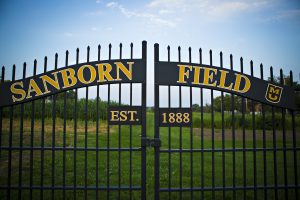
The University of Missouri College of Agriculture, Food and Natural Resources (CAFNR) celebrated the 130th anniversary of Sanborn Field on Tuesday, July 24, on the MU campus. There were discussions and presentations, as well as displays of historical equipment and photos, in Eckles Hall. There were tours of Sanborn Field, too. Sanborn Field is the oldest, continuous experimental field west of the Mississippi River and the third oldest in the world. “Not only was it the 130th anniversary of Sanborn Field, it was the 101st year of the Duley-Miller Erosion Plots and the 70th anniversary of…
May 10, 2018
Covering Their Tracks
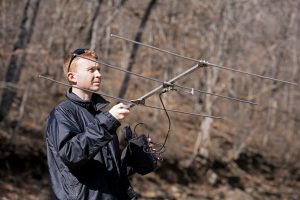
Whether a creature has feathers, fur or fins, it really doesn’t matter to Mike Byrne. He just wants to know where it’s going and what it might do when it gets there. Byrne is one of the newest faculty members in the College of Agriculture, Food and Natural Resources at the University of Missouri, arriving on campus in June 2017. The assistant professor of natural resources is an expert in the field of wildlife movement ecology. By learning more about why animals go where they go and do what they do, resource managers can improve conservation and species…
April 12, 2018
Breeding a Better Bee
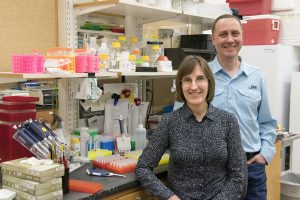
The honey bee is as busy as ever. From almonds to zucchini, honey bees pollinate more than 90 agricultural crops in the United States — worth more than $15 billion annually. In 2017, the apiculture industry provided pollination services valued at nearly $320 million, according to the USDA’s National Agricultural Statistics Service. In addition, the bees also produced almost 150 million pounds of honey. But honey bees face a multitude of threats. Insecticides, diseases and pests all contribute to colony losses, but no stressor is greater than the Varroa mite. This tiny external parasitic mite, which was…

Feb. 14, 2018
The Miracle Bean
When the Human Genome Project began in 1990, the goal was to sequence and map all of the genes that make up the human DNA. That project was completed in 2003 – and genome projects on many other species followed in subsequent years. Several crops grown in Missouri soon underwent genetic sequencing and mapping, including soybeans. The first soybean cultivar to be sequenced, “Williams 82,” was published in 2010. This widely-grown cultivar was chosen to represent the northern United States germplasm. For nearly a decade, this cultivar has served as the main soybean reference genome – the sequence…
May 17, 2017
Christopher R. Daubert Named CAFNR Vice Chancellor & Dean
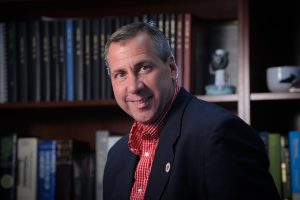
Christopher R. Daubert, currently professor and department head of Food, Bioprocessing & Nutrition Sciences and system co-chair of Food, Biochemical & Engineered Systems at North Carolina State University, has been named vice chancellor and dean of the MU College of Agriculture, Food and Natural Resources. He will join CAFNR effective Aug. 1. “The MU College of Agriculture, Food and Natural Resources has strong people, programs and partnerships serving our land-grant heritage, making CAFNR such an attractive destination and opportunity for leadership,” Daubert said. “The faculty and staff are exceptional and dedicated, and CAFNR’s students are incredibly capable and…
March 13, 2017
High Tech, Low Cost
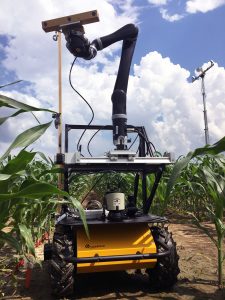
A two-pronged robotic system pioneered by University of Missouri researchers is changing the way scientists study crops and plant phenotyping. Felix Fritschi, associate professor in the Division of Plant Sciences, and Suhas Kadam, a postdoctoral fellow in Fritschi’s laboratory, have teamed up with Gui DeSouza, associate professor of electrical engineering and computer science in the College of Engineering and his Vision-Guided and Intelligent Robotics (ViGIR) Laboratory to study the effects of climate change on crops in Missouri. The effort is part of a larger study, funded by the National Science Foundation, to understand the overall effects of climate change…
Feb. 9, 2017
Navigating New Waters
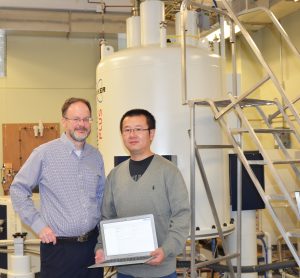
Principal component analysis (PCA) is nothing new. In fact, the math for PCA processes, in which a large amount of data can be categorized or compared by discovering distinct patterns in such fields as spectra and microscopy, has been around since Steven Van Doren, professor of biochemistry, was an undergraduate at Oklahoma State University double majoring in biochemistry and computer science in the early ’80s. Van Doren recalled how at that time he had to write many lines of code to perform a PCA command that Jia Xu, a postdoctoral fellow who works in his laboratory, can now insert…