Evergreen
Feb. 2, 2017
‘A Whole New Game’
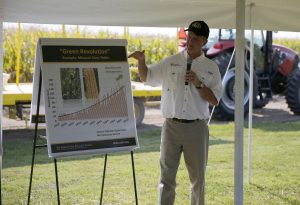
With technology ever changing, University of Missouri Extension professor Gene Stevens knows how important it is to keep up with the latest trends. Stevens, who is located at the Fisher Delta Research Center in Portageville, Mo., has developed a program to help farmers do just that. Stevens, through MU Research and Extension, has developed the Crop Water Use App which can assist farmers with their irrigation scheduling. “When I began my career, there was a lot of excitement about using computers in agriculture,” Stevens said. “That was back in the 1980s, when we didn’t have as many…
Jan. 18, 2017
Staying Fresh
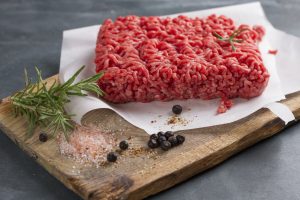
Nutritionally, nothing is different when red meat, say ground beef for instance, darkens to brown, but try telling that to the average customer at a grocery store. “That’s the number one driver that consumers have,” said Carol Lorenzen about the bright redness quality of meat. A research team involving that included Lorenzen, professor of meat science in the Division of Animal Sciences, and her graduate student, Jade Cooper, have been investigating the impact of LED (light-emitting diode) lighting on beef color. The team published a research paper in the October 2016 issue of the Journal of Animal…
Dec. 8, 2016
Measuring the Impact of Fundamental Change
The agricultural production revolution is here. Biotechnology, robotics and automation; big data and precision agriculture; genetic-based chemistry and other digital innovations are changing the ways and rules of the agriculture industry. Never before have farmers and food producers had more access to more data points that can provide newfound insight on how to grow and produce crops with greater efficacy. Through a multitude of sensors, for instance, farmers can have instant access to field data on plant genetics and growth, soil conditions, disease and pest pressures, atmospheric temperature and humidity levels as well as modern analytics on how to…

Nov. 30, 2016
A Man for All Seasons
Everyone knows about the smiley face. It is part of the brand of Vice Chancellor and Dean Tom Payne. Looking at all of the related memorabilia in his office, one can see how the symbol has become synonymous with his infectious optimism and enthusiasm he has used over the past 18 years to help guide the College of Agriculture, Food and Natural Resources through good times and bad. “I wanted to add a little more emphasis and so I wrote my name ‘Tom’ and put the smiley face on it and it just took off from that,” Tom says…
Nov. 17, 2016
‘A Daughter of CAFNR’
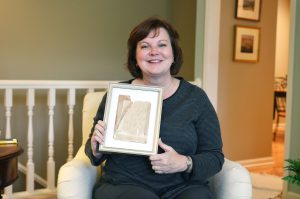
The Columbia home of Robin Wenneker contains several pieces of memorabilia that help tell the story of both her childhood and her family’s deep connection to the University of Missouri. Yet out of all of the scrapbooks, photos and artwork, it is a piece of cardboard that she claims as one of her most prized possessions. The cardboard piece, encased in a glassed-in frame, contains a short note from her father, Ron Wenneker, when she was in middle school. In a pre-cell phone/texting world, Ron would always leave notes for Robin, her mother, Carolyn; and her brother, Ryan.
Aug. 31, 2016
Looking Back 40 Years — And Beyond
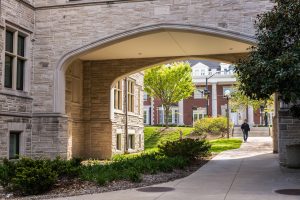
It began 40 years ago with what could best be called a “grand experiment.” For decades, faculty at the University of Missouri’s Department of Biochemistry had one collective goal — to study life at the molecular level — but were in two separate units, one housed in the College of Agriculture, Food and Natural Resources under the name agricultural chemistry and one in the School of Medicine under its current name. It is about a 15-minute walk from Schweitzer Hall, located on the northeast corner of campus, to the medical school. The first merged department chair, Jim Gaylor, had the cross-campus…

Jan. 19, 2015
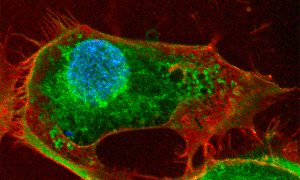
Recycling Mitochondria
A molecule could be key to developing drugs that will keep brain cells healthy in individuals with Parkinson’s disease.
Jan. 6, 2015
The All-In Enzyme
The behavior of an enzyme may reveal details to treat chronic obstructive pulmonary disease, cancer and heart disease.
July 29, 2014
Mizzou Honor
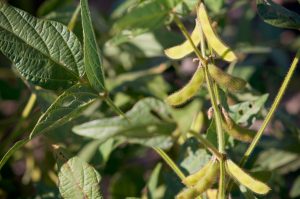
Gary Stacey, professor of Plant Sciences and Missouri Soybean Merchandizing Council Endowed Professor of Soybean Biotechnology, was named a University of Missouri Curators Professor.
July 9, 2014
No Drought of Ideas
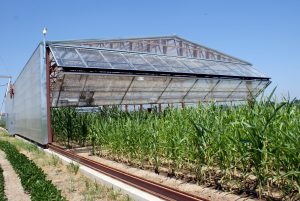
Droughts have a devastating effect on farms. In Missouri and most of the world, droughts are the leading cause of crop failure. They increase consumer costs, kill livestock, reduce crop yields and trigger wildfires and dust storms. They also can cause malnutrition and famine, social unrest and political instability. To combat these drought problems, researchers at Bradford Research Center have turned to making it dry every year in the two drought simulators on site. The simulators enable the scientists to study how reduced water availability affects plants and crop productivity. The shelters look like 50-by-100-foot greenhouses on…