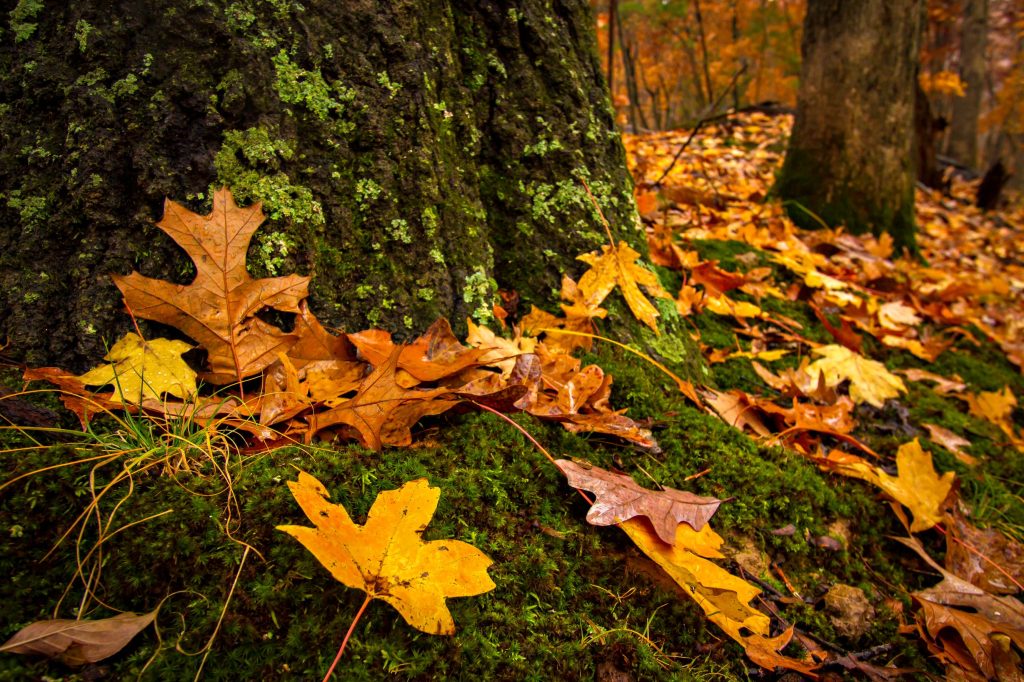
White oaks are a familiar part of Missouri’s landscape, from Ozark hillsides to privately owned woodlands; they support wildlife and shape forests across the state. While mature oaks still dominate many forests of the eastern US, research shows too few young trees are surviving to replace them. Ongoing research from the College of Agriculture, Food and Natural Resources (CAFNR) is helping foresters understand both the strengths of the species and the challenges it faces.
“A lot of Missouri’s forests are 80 years old or older, so we have to keep thinking about what the next generation of white oaks will look like,” said Ben Knapp, associate professor in CAFNR’s School of Natural Resources. “Because forests are long-lived and slow to develop, the decisions we make today will affect forests for decades into the future.”
Knapp studies how forest management affects oak regeneration and the sustainability of Missouri forests. White oak grows across the central and eastern United States, but he describes Missouri as a “hotspot.”
“Missouri is in a really important part of the white oak range,” Knapp said. “Compared to some more productive eastern forests, Missouri conditions favor the species because it is generally well adapted to the region’s drier sites.”
White oak plays a significant role in Missouri’s multibillion-dollar forest products industry, which contributes more than $10 billion annually to the state economy and supports thousands of jobs. The species produces sawtimber that supports industries tied to hardwood flooring, furniture and other products, as well as its role in the cooperage industry. It’s valued for wine and whiskey barrels because its unique, leak-resistant wood contributes flavor during aging.
In a 2018 study, Knapp and professor emeritus Stephen Pallardy used nearly five decades of forest inventory data from mid-Missouri to examine how unmanaged forests changed over time across several forest types. The study documented denser forests and increasing competition from more shade-tolerant species, particularly sugar maple, suggesting some forests could gradually shift away from oak dominance. Knapp and Pallardy found oak regeneration remained scarce beneath the canopy, raising concerns about whether future trees will successfully replace aging oak forests. The findings suggested active forest management may be needed to maintain oak-dominated forests in the future.
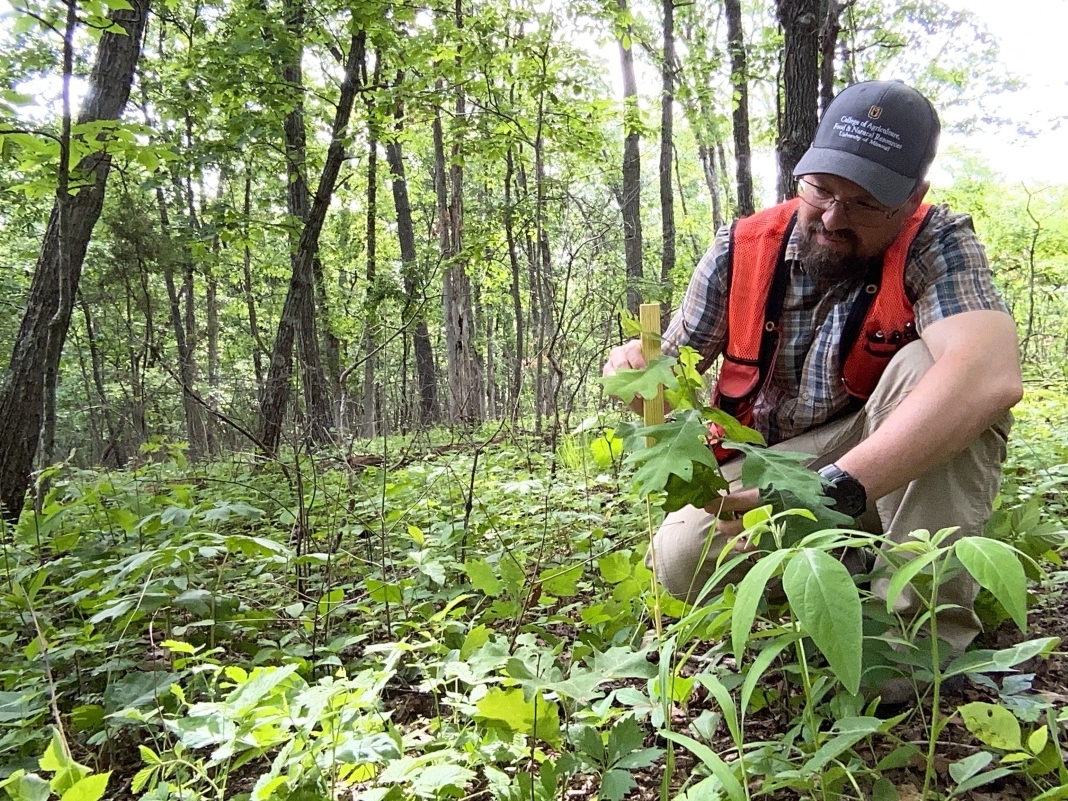
More recently, a 2025 study led by postdoctoral researcher Lance Vickers and Knapp expanded the focus beyond Missouri, using data from the USDA Forest Service Forest Inventory and Analysis program to examine long-term oak population trends over the past 30 years. Rather than focusing on forest composition alone, the study analyzed broader population patterns. The findings showed white oak populations are increasingly dominated by older trees, due to factors such as deer browse, limited seedling establishment and dense forest canopies affecting regeneration success.
“The innovative research that has been conducted by the CAFNR forestry team has helped the Department of Conservation better understand how they can successfully regenerate and manage white oak forests across Missouri,” said Michael Bill, forestry section chief and state forester with the Missouri Department of Conservation (MDC).
According to MDC, more than 80% of Missouri forestland is privately owned, giving landowners an important role in the future of oak forests. Knapp said MU Extension, local foresters and the MDC can all play a part in connecting landowners with the expertise best suited for their region.
“There isn’t one single management approach that works everywhere,” Knapp said. “Part of the research is understanding which tools, whether that’s prescribed fire, uneven-aged management or even-aged systems like clearcutting, can best support white oak regeneration under different forest conditions.”