After first learning about poultry during her freshman year as an animal sciences major, Carly Nielsen discovered a passion for the industry.
“Turkeys are kind of silly,” she said. “They test your limits sometimes, but they’re fun.”
Nielsen, now a senior at the University of Missouri, works as a student assistant research technician at Mizzou’s Rocheford Turkey Research Farm.
“Working in meat science is definitely my calling,” she said. “I’ve gained a whole new respect for an industry that I didn’t really know that much about before, and now I want to go and do my part in it.”
At Mizzou, the university’s farms serve as living laboratories, providing students with hands-on opportunities to apply classroom knowledge and explore innovative agricultural practices. From animal sciences and crop production to agricultural technology and sustainability, these working farms prepare the next generation of agricultural leaders to tackle challenges facing the industry.
Poultry research with a purpose
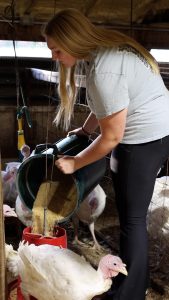
Nielsen assists with research focused on producing higher-quality turkey meat through the birds’ diets.
“Given different types of diets, we’re looking at how the birds react to that and how they grow the meat we consume to try and get more efficient with it,” she said. “The goal is to get more product off fewer animals and better product with that as well.”
Nielsen oversees the care of the turkeys and ensures the facility is running properly.
“My day-to-day is going in, checking on the birds, making sure everything looks good and is working the way it should be,” she said.
Once the study is complete, the turkeys will be processed and sold at the Mizzou Meat Market. Being involved in the process of raising the animals and exploring ways to improve their contributions to the food supply is something Nielsen has developed a deep appreciation for.
“I’ve learned a lot about the industry as a whole,” Nielsen said. “I know the care that goes in on the live side of the animals, making sure they have the best life possible so that they can provide for us as food.”
As she nears the end of her undergraduate experience, Nielsen’s time in CAFNR has opened her eyes to the many opportunities and potential contributions she can make within the poultry production industry.
“Coming out here and really seeing what Mizzou is all about has been a very positive experience,” she said. “It’s one that I will forever be grateful for as I enter the next phase of my life.”