Stories
Oct. 1, 2020
Q&A With Ben Luebbering
What are opportunities in CAFNR for students interested in the swine industry? The best opportunity for students in CAFNR who are interested in pigs is the MU Swine Club. The Swine Club allows students who are interested in the swine industry to connect with other students that have similar interests. It also serves as a great way to meet industry leaders and learn about hot topics involving pigs, not to mention that the club makes time to take field trips to various businesses that involve pigs. What was it like being the 2019 Pig Farmer of Tomorrow?…
Sep. 25, 2020
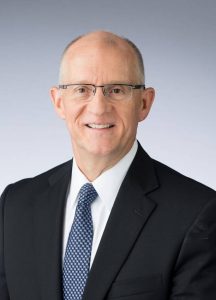
Remembering the Legacy of Dr. William Danforth
The passing of William H. “Bill” Danforth, M.D., last week at age 94 brought to the spotlight his work in academic administration, medicine and science, and outreach in the St. Louis area. His contributions also can be felt here at the University of Missouri. Dr. Danforth, chancellor emeritus of Washington University, was the founding chairman of the Donald Danforth Plant Science Center (DDPSC). Mizzou, including the Division of Plant Sciences in the College of Agriculture, Food and Natural Resources (CAFNR), and the Interdisciplinary Plant Group (IPG), has had a long partnership with the Donald Danforth Plant Science Center.
Sep. 11, 2020
Q&A With Alex Munoz
What are your job duties/job responsibilities in the College of Agriculture, Food and Natural Resources? I’m the student support specialist for the Division of Plant Sciences where I am the main point of contact for prospective students who are interested in our programs. I work to help with Division of Plant Sciences’ recruitment and outreach efforts as well as help with general recruitment for CAFNR. During normal times, I would be on the road visiting schools, college fairs and hosting visitors to campus. On top of this, I run the division’s social media accounts and help out faculty…
Sep. 9, 2020
Henry Nguyen Named Editor of The Plant Genome
The Crop Science Society of America (CSSA) and the American Society of Agronomy (ASA) recently announced three appointments/reappointments of journal editors. Henry Nguyen, professor in the University of Missouri College of Agriculture, Food and Natural Resources (CAFNR) Division of Plant Sciences, was named the editor of The Plant Genome. “I am honored and inspired to take on a new role as editor of The Plant Genome,” Nguyen said in the announcement. “I was involved in the development of this journal as former chair of the C-7 Division (Genomics, Molecular Genetics and Biotechnology) and have served on the editorial board for…
Aug. 31, 2020
Creating Inclusive Programming
On Friday mornings at the Clark Produce Auction, University of Missouri Agriculture and Environment Extension agronomist Dhruba Dhakal sets up a table, plant posters and an MU Extension sign. MU Extension’s objective is to serve all Missourians with resources and research needed to improve lives, communities and the economy. When Dhakal noticed Amish producers in Clark could benefit from a plant diagnostic clinic, he knew there was only one thing to do. “While attending one of the sales, I spoke with some of the leaders in the Amish community and learned they were struggling with different horticultural…
Aug. 28, 2020
IPG Graduate Student and Postdoc Receive Awards for CROPS Seminar Presentations
The regional Collective Research Organization of Plant Scientists (CROPS) virtual seminar series, organized by graduate students and postdocs at the University of Nebraska-Lincoln, took place over the summer, wrapping up the final sessions earlier in August. On Aug. 18, biochemistry PhD student Shannon King and plant sciences postdoctoral fellow Jian Kang received awards for Graduate Student Presentation and Postdoc Presentation, respectively. King, who works in the labs of Scott Peck, Felix Fritschi and Robert Sharp, was awarded first place for graduate student presentation, and Jian Kang in the Robert Sharp and Mel Oliver labs, was awarded third place for Postdoc…
Aug. 20, 2020
Samniqueka Halsey Publishes Letter in Nature Ecology and Evolution
Samniqueka Halsey, assistant professor in the School of Natural Resources and CAFNR Faculty Fellow, is the lead author on a letter published in Nature Ecology and Evolution. “Elevate, don’t assimilate, to revolutionize the experience of scientists who are Black, Indigenous and people of colour” (SharedIt PDF version) outlines suggestions for how minoritized individuals can not only survive but thrive in ecology and evolutionary biology. The letter’s authors, five Black women who started as doctoral students at the same university, used their shared experience to develop a list of eight strategies. The strategies include: expect and use external…
Aug. 14, 2020
Showcasing a Competitive Spirit
The COVID-19 pandemic pushed the national Animal Society of Animal Science (ASAS) Academic Quadrathlon to a virtual competition. That didn’t slow down the Mizzou Academic Quadrathlon team. After winning their regional competition, MU finished tied for first at the national competition, which was held in July. The team finished second overall after tiebreakers were taken into consideration. They finished first in the lab practical, second in the written exam and the quiz bowl, and third in the oral presentation. “I’m super proud of the entire team and how far they’ve come,” said Addison Byrne, instructor in the…
Aug. 12, 2020
A New Path
A new road will soon be constructed through CAFNR’s South Farm Research Center, but disruption to operations will be minimal and visibility for the research center will be increased, according to Tim Reinbott, South Farm superintendent and assistant director of the Missouri Agricultural Experiment Station. Discovery Parkway will soon extend from the Discovery Ridge exit off of Hwy 63 north to the intersection of Rolling Hills and New Haven roads, passing through South Farm from the south. The effect on the Research Center will include removing the portions of Sugar Grove Road that would intersect Discovery Parkway. Sugar…
Aug. 10, 2020
Keeping Consumers Safe
Produce contamination accounts for an estimated 46% of foodborne illnesses across the United States each year — a serious issue affecting health, the economy and society as a whole. Even in the midst of the current pandemic, safety training for produce farmers is not only vital, but required for many, said MU Extension horticulture field specialist Patrick Byers. To combat contamination issues, the federal Food Safety Modernization Act (FSMA) Produce Safety Rule requires that many growers receive education and produce safety training, such as that offered by the Produce Safety Alliance through MU Extension. With COVID-19 restrictions on…