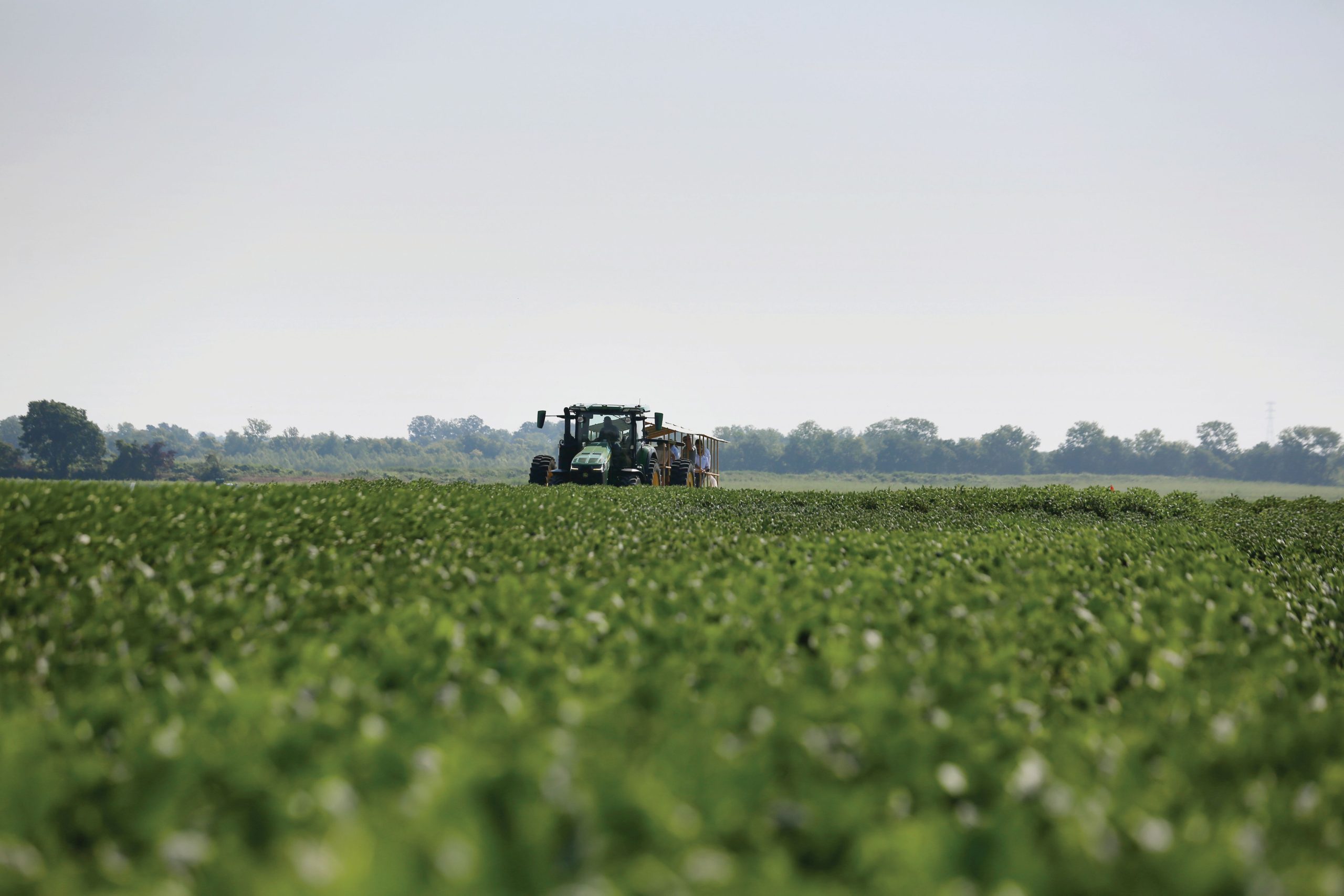
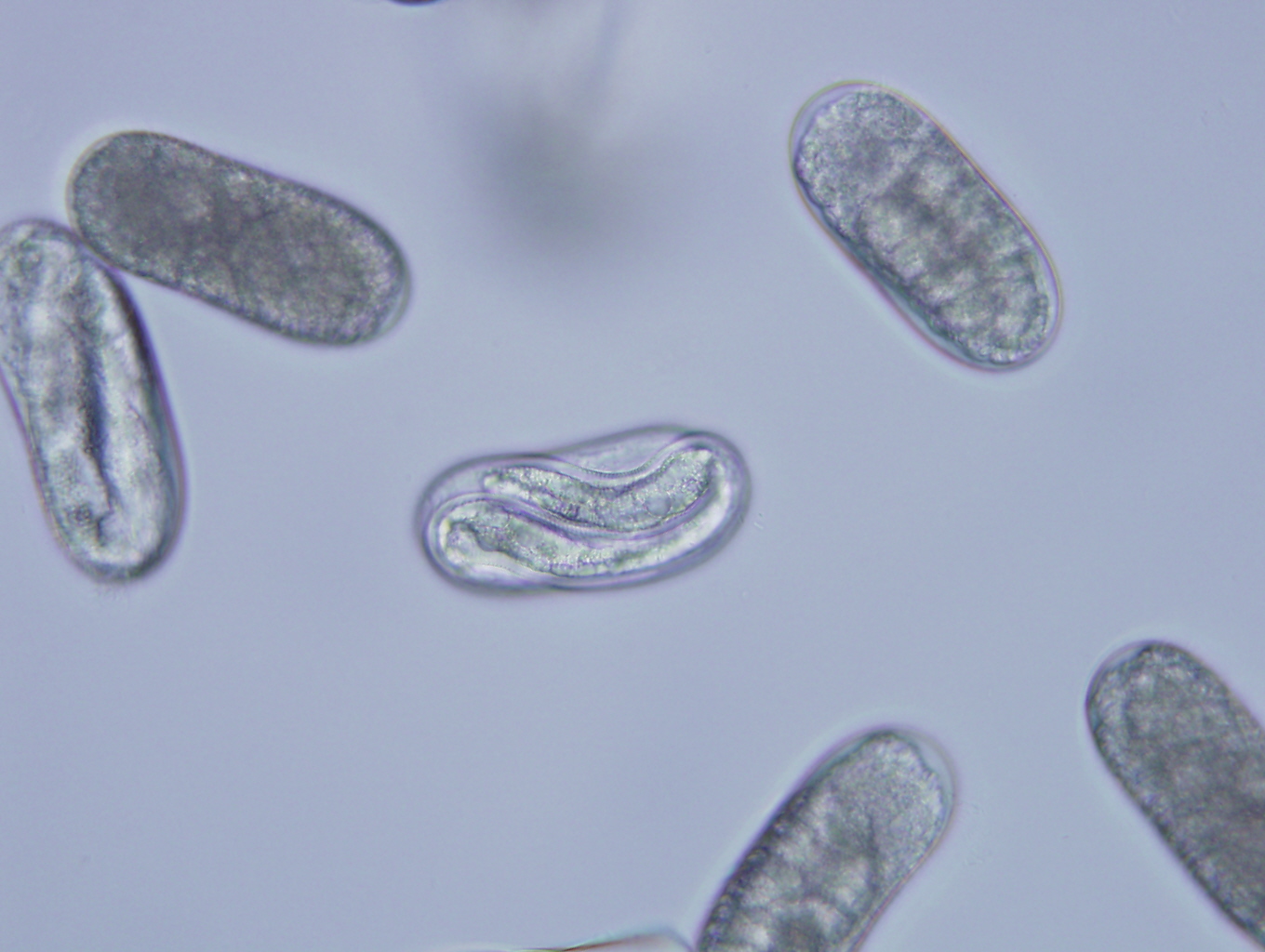
Soybean cyst nematode (SCN) often damages Missouri soybean fields long before growers realize there is a problem.
“Unfortunately, when we’re talking about soybean cyst nematode, we’re talking about a pest or pathogen where you don’t often notice that they are infecting your soybean plants,” said Mandy Bish, state extension plant pathologist in the Division of Plant Science and Technology. “That’s one of the biggest challenges because we estimate up to about 30% yield losses without having any above-ground symptoms.”
In a recent College of Agriculture, Food and Natural Resources (CAFNR) survey, doctoral student Jeff Barizon detected SCN in approximately 80% of the 200 Missouri soybean fields sampled during a two-year study. The survey found a median count of 2,100 eggs per 100 cubic centimeters of soil, a level that can contribute to yield losses.
For decades, Bish said, soybean growers largely relied on a single source of SCN resistance, but CAFNR researchers are identifying and evaluating newer soybean genetics and management approaches (see Seeking New Genetic Resistance below).
“We have multiple teams at MU studying this problem from different perspectives. Our team is looking at how we implement new management solutions,” Bish said. “We partner with industry and academia to test new technologies in the greenhouse and evaluate promising tools in the field to see what happens when different SCN-management strategies are introduced into clay soils in northern Missouri or sandy soils in southeast Missouri.”
The university’s new SCN Diagnostics Lab, expected to be completed later this summer, will help researchers process more samples and expand SCN monitoring efforts across Missouri. Bish said the expanded capacity will also allow her team to work with more growers managing SCN in their fields.
“Farmers are asked to know a lot about a lot of different things,” Bish said. “They know their farms and their operations, and we work with them as collaborators to figure out what management approaches make the most sense for their fields.”
Beyond soybean production, the clinic supports homeowners, golf courses, gardeners and specialty crop producers dealing with parasitic nematodes across Missouri. Bish said Missourians with questions about potential nematode issues can work through local MU Extension offices or contact the SCN Diagnostics Lab directly for testing information and support.
Seeking New Genetic Resistance
Since the discovery of SCN in 1954, plant scientists have worked to combat its destructive impact. Now, teams of researchers are on the verge of breakthroughs in SCN resistance technology.
“The University of Missouri boasts a legacy in soybean genetics and breeding,” said Henry Nguyen, professor of plant genetics and biotechnology. “Dr. Sam Anand evaluated more than 9,000 exotic soybean germplasm for SCN resistance. Many of those lines, along with hundreds more developed by Mizzou’s soybean program, have contributed to the SCN resistance available.”
However, 95% of soybeans with resistance are derived from limited genetic resources, and the nematodes are adapting and becoming resistant.
“Resistance from the existing mechanism is starting to break down,” Nguyen said. “So for the next several years, that is going to continue, and that makes this crucial to find additional resistance genes and incorporate them into new varieties.”
With support from a $750,000 USDA National Institute of Food and Agriculture grant, Nguyen and his team have identified a new resistance mechanism — an alternative genetic source. They are now using gene-editing techniques to express this gene, with hopes to understand the alternate genetic mechanism of SCN resistance, which will be integrated into soybean breeding programs.
“Because we’re using gene-editing methods, regulatory hurdles are lower, allowing us to accelerate this work,” Nguyen explained. “This will expand the genetic diversity of soybean breeding pools. Eventually, we can stack this new gene with existing resistance genes to create more durable plants, making it much harder for SCN to adapt and overcome.”
In addition, Andrew Scaboo, associate professor of plant science and technology, made use of the genetic variety available in exotic germplasm housed in the USDA’s national soybean collection to do genetic mapping and pinpoint a gene. His colleague at the University of Georgia — former MU faculty member Melissa Mitchum — further discovered that if you stopped the gene from functioning via CRISP-Cas9 gene-editing knockouts, the plant would have increased resistance to the nematodes.
“It’s really fascinating from a molecular and gene functionality perspective,” Scaboo said. “You have the genes of the nematodes that help them to attack the plant, and then you have the genes of the plant that help the plant protect itself.”
The researchers stressed the importance of funding for this project, which came from Missouri Soybean Merchandising Council and United Soybean Board.
The project was funded by farmers, ensuring that the resulting research and innovations will directly benefit producers, according to Scaboo.