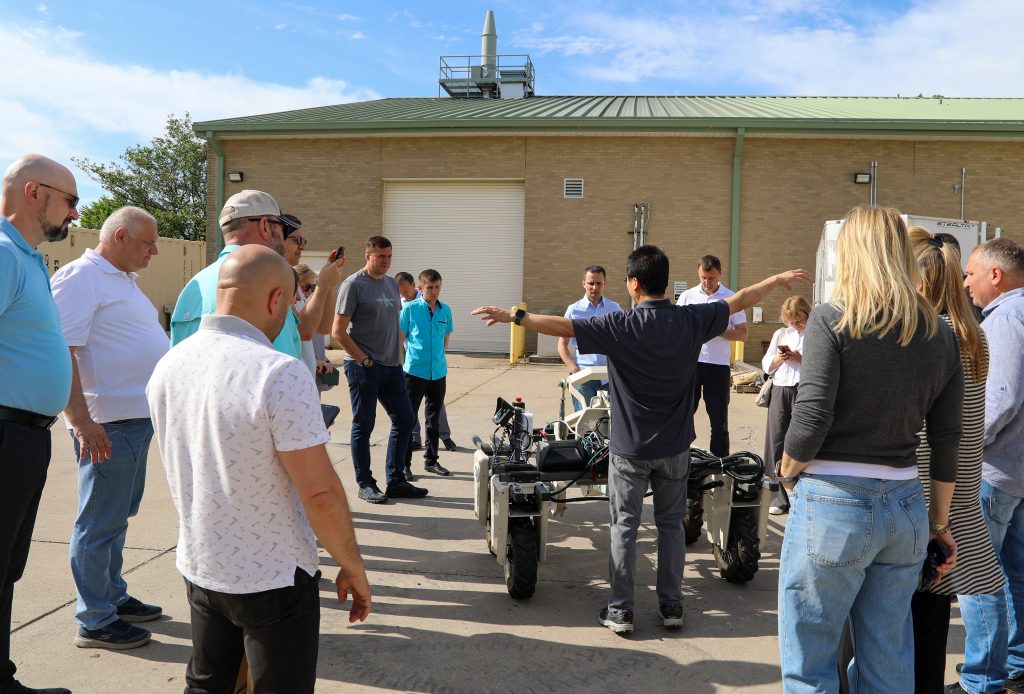
A group of 20 agricultural faculty members and entrepreneurs from Ukraine spent two weeks in Missouri last month as part of an educational visit with the aim of advancing the country’s capabilities in precision agriculture, agro-scouting and digital agronomy.
The Agricultural Growing Rural Opportunities in Ukraine (AGRO) Activity supports the transformation of Ukraine’s agricultural sector into a more modern, market-oriented and resilient industry. AGRO strengthens agricultural market systems, promotes access to financing and improves the supportive environment for small and medium agricultural producers, with the ultimate goal of increasing rural incomes and economic resilience, and accelerating the economic development of rural Ukrainian communities.
The trip was facilitated by Kerry Clark, associate research professor and director of CAFNR International Programs; Rusty Lee, field specialist in agronomy, Montgomery County; and Meikah Dado, assistant professor in agricultural education. Mizzou tour stops included Bradford Research Farm, Columbia, Mo., to learn about field diagnostics; the Plant Diagnostic and Soil and Plant Testing laboratories; Greenley Research Farm, Novelty, Mo., to learn about integration of agro-scouting data into precision agriculture systems; Ag and Environment Extension to understand the role of extension services in scaling agronomic knowledge from research to farms; Center for Regenerative Agriculture to showcase efforts to help farmers implement new practices; Digital Agriculture Research and Extension Center for demonstrations of agricultural technologies including sensors, mapping and modeling; and Fisher Delta Research, Extension and Education Center, Portageville, Mo., to deepen mastery of practice U.S. field scouting protocols across a second, distinct crop system and geography.
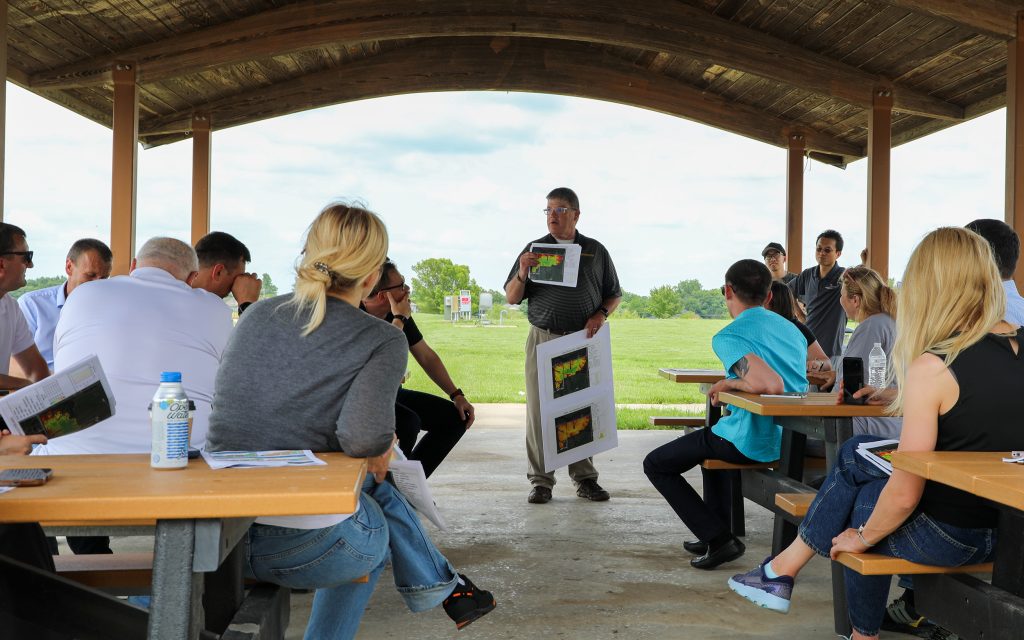
Other educational agro-scouting tour stops included the St. Louis Science Center, three cooperatives across the state, a cattle auction, private farms, a farmers market, Columbia Center for Urban Agriculture, wineries, an aerial applicator and meetings with independent crop scouts.
As a part of AGRO’s focus on establishing and strengthening business linkages between Ukrainian organizations and American inputs and equipment suppliers, as well as other organizations that may be interested in expanding their engagement with the Ukrainian market for their goods and services, AGRO facilitated a series of trips to the United States for various segments of Ukraine’s agriculture sector.
“The trip’s aim was to foster bilateral cooperation, support sustainable agricultural development in Ukraine, and promote U.S. agritech expertise and partnerships,” Clark said.
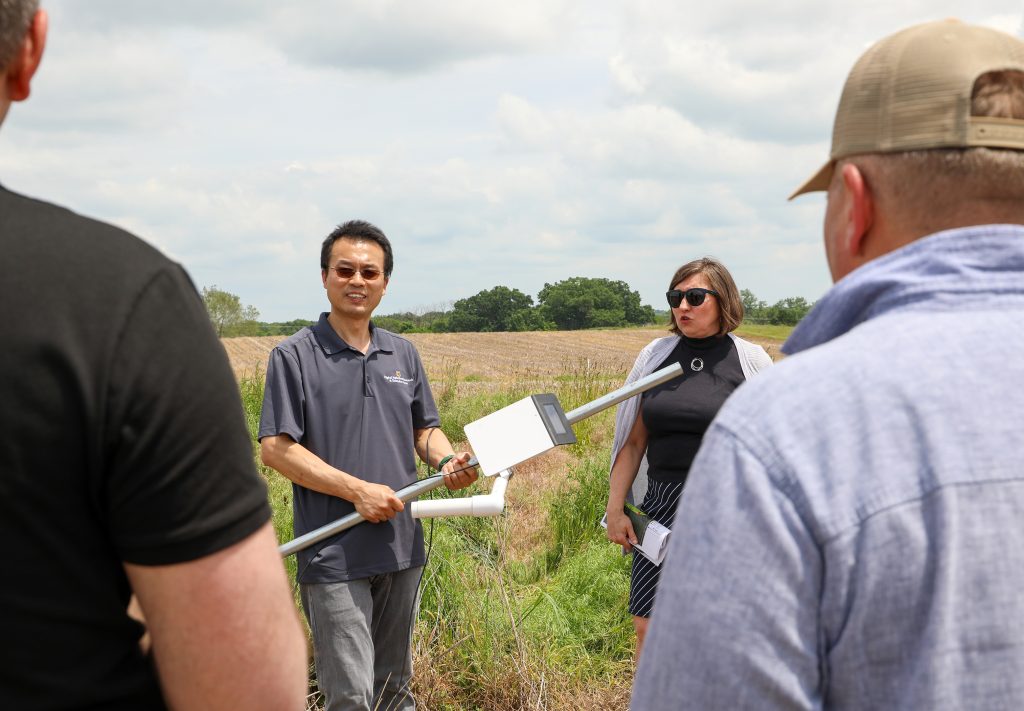
Goals of the program include strengthened agronomic advisory capacity for hundreds of farmers in Ukraine through trained intermediaries; facilitation of technology transfer and institutional cooperation between U.S. and Ukrainian entities; and a foundation for scalable agro-scouting service models based on U.S. best practices and adapted to Ukraine’s rural market needs.
This exchange will create lasting linkages, reinforce the value of U.S. technical expertise and accelerate Ukraine’s journey toward modern, efficient and competitive precision focused agriculture initiatives, Clark said.