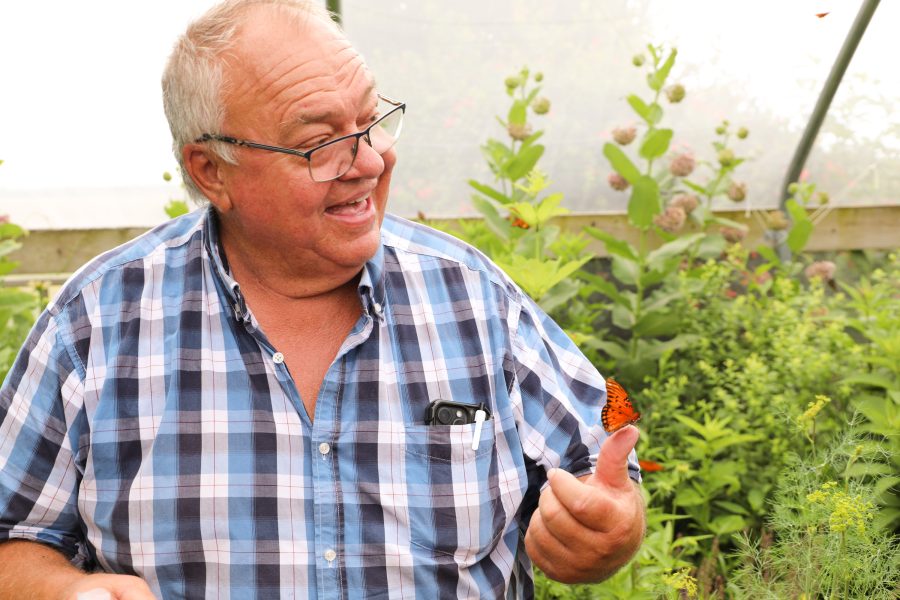
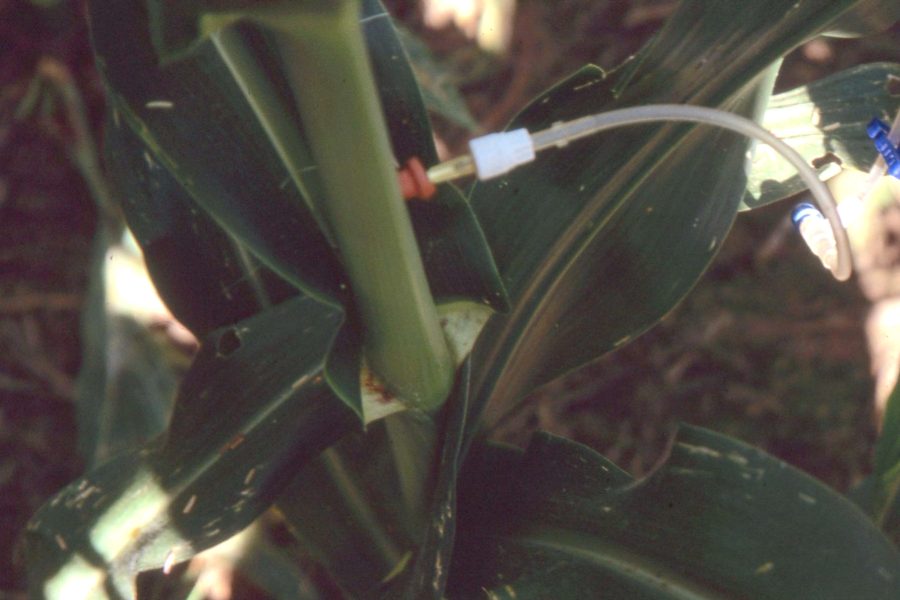
Long before precision agriculture, drones and artificial intelligence became part of everyday conversations in farming, Tim Reinbott was crawling through soybean and corn fields carrying IV bags and needles. The setup looked more like a hospital than a research plot.
“We actually took IV lines and injected the compound that we wanted directly into the plant,” Reinbott said. “I would crawl around fields injecting all kinds of things into the plants.”
At the time, Reinbott was working as a research associate alongside University of Missouri plant physiologist Dale Blevins. Together, they studied how plants responded to different growth-regulating compounds through growth chamber, greenhouse and field research.
Their work pushed boundaries in the late 1980s and early 1990s. Many of the same traits they were studying can now be manipulated through modern genetic technologies.
“If I’m not pushing the envelope, something’s wrong,” Reinbott said.
That curiosity and willingness to explore new ideas has guided him throughout more than 40 years with the College of Agriculture, Food & Natural Resources (CAFNR).
Where the Sparks Began
Growing up on a grain and livestock farm in Missouri’s Bootheel, Reinbott learned early on to pay attention to what was happening in the field. One experience in particular shaped how he viewed agricultural research.
As a high school FFA student, he attended a field day at Mizzou’s Fisher Delta Research, Extension and Education Center in Portageville, part of CAFNR’s statewide Missouri Agricultural Experiment Station (MoAES). The center was established to help researchers study the unique crops, soils and growing conditions of southeast Missouri.
During one stop at the field day, soybean breeder Grover Shannon stood beside experimental soybean lines bred for resistance to soybean cyst nematode (SCN). At the time, SCN, a microscopic pest that attacks soybean roots, was devastating fields across the region, including Reinbott’s family farm.
“I can still picture it in my mind,” Reinbott said. “The resistant soybeans were almost up to his chest, and the old variety we had been planting was down around his knees. That was one of those ‘aha’ moments.”
Soon after, Reinbott’s family planted the newly released Bedford soybean variety.
“We went from 10-to 15-bushel soybeans to 50 and 50 bushels,” he said. “That was a real-life impact. That’s what made me fall in love with the science behind agriculture.”
Reinbott attended Southeast Missouri State University for his first two years of college before transferring to MU to study agronomy, later earning a master’s degree in crop production. While at MU, he met Blevins, who would become one of the most influential mentors of his career. Blevins challenged students to think differently and tackle questions from different angles, Reinbott recalled.
Navigating Challenges
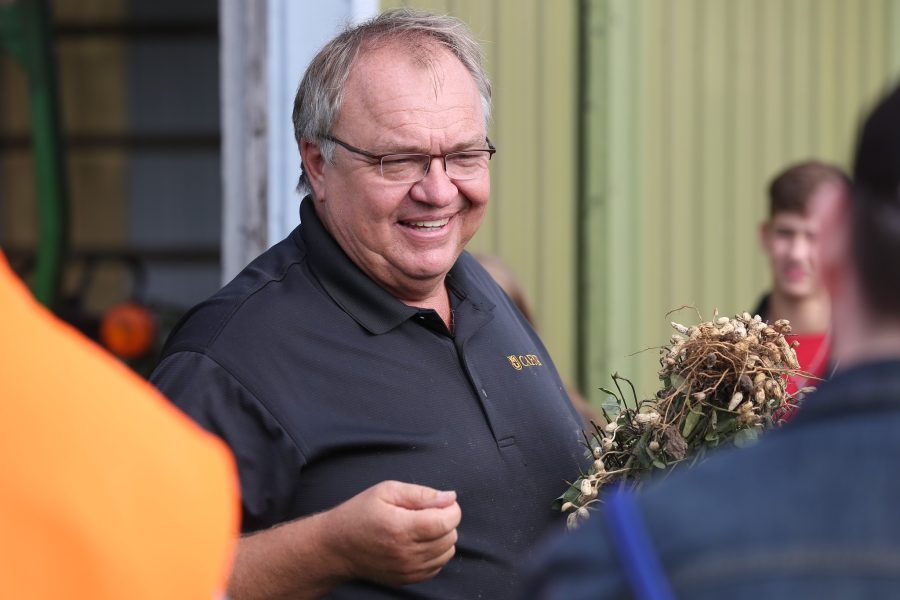
One of those discoveries emerged a few years later. The focus was grass tetany, a problem cattle producers had battled for decades.
Researchers knew certain fertilizer practices could worsen the disorder, but did not fully understand how to prevent it. Blevins challenged Reinbott to figure out how to better help farmers manage the problem.
“So many people had studied it in the field, but we stepped back and started with the basics,” Reinbott said. “We wanted to understand what regulated calcium and magnesium uptake in plants first. Once you understand the mechanism, then you can solve the problem.”
After dozens of growth chamber experiments and repeated greenhouse studies, Reinbott discovered phosphorus played a critical role in how forage plants absorbed and moved magnesium and calcium.
“We found that by managing phosphorus levels in forage systems, we could reduce the grass tetany hazard,” Reinbott said. “That was one of those classic studies where basic research answered a very practical question. It was probably the biggest impact project of my career.”
Expanding MoAES Impact
In 2000, Reinbott became superintendent of MU’s Bradford Research Farm — part of MoAES’ Central Missouri Research, Extension and Education Center. The farm supports field-scale research involving crops, livestock, conservation and natural resources. There, Reinbott’s work expanded beyond crops into conservation and interdisciplinary collaboration.
His interest in conservation stems partly from his father, who maintained fence rows and wildlife habitat on the family farm even during the “fencerow-to-fencerow” farming era of the 1970s, when many producers removed habitat to maximize production.
“I didn’t realize it at the time, but my dad was quite the conservationist,” Reinbott said. “We had wildlife on our farm where other people didn’t. Years later, I understood why that mattered.”
Reinbott worked alongside MU Extension Wildlife Specialist Bob Pierce, the Missouri Department of Conservation and the Natural Resources Conservation Service to establish habitat-focused conservation practices at Bradford. Bobwhite quail became one of the team’s key indicators of success.
“When we first started, we might have had one covey of quail across the entire farm,” Reinbott said. “Within a few years, we were up to around 25 coveys because we had created the right habitat.”
The work at Bradford eventually expanded into pollinator habitats, beneficial insect research and soil health initiatives that continue today.
“What’s good for bobwhite quail is also good for beneficial insects,” Reinbott said. “One thing kept leading to another.”
Over time, Reinbott became known not only for his own research, but also for bringing researchers together across disciplines and institutions.
“I’ve always had this thought that we’re all here to help each other,” Reinbott said. “Sometimes I’m not the one leading the project — I’m just the connector, introducing people so they can work together.”
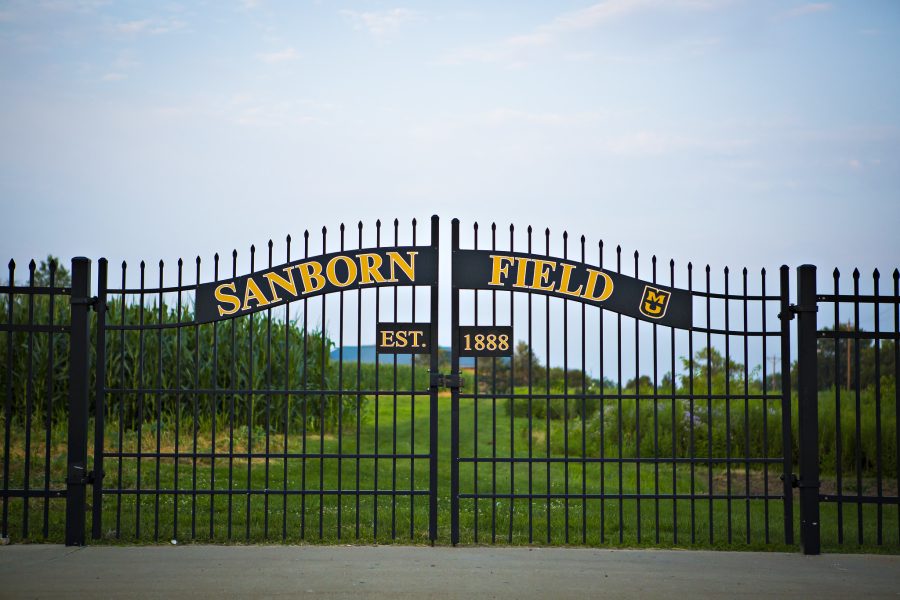
That collaborative approach remains central to Reinbott’s work today as Director of MoAES Communications and Director of Sanborn Field.
Sanborn Field was established on the MU campus in 1888 to help researchers study how different farming practices affect soil productivity over time. Today, it remains one of the oldest continuously operated agricultural research fields in the United States.
Long-term soil records from the field continue supporting research on soil health, fertility and environmental change.
Even after decades in agricultural research, Reinbott still sees discovery the same way he did as an FFA student standing in a soybean field at the Delta Center: as the result of observation, curiosity and a willingness to ask difficult questions. That mindset continues to drive not only Reinbott’s work, but also broader research efforts across the MoAES.
“Technology and consumer needs continue to change, and it is critical for farmers and those in their communities to continue to adapt,” Reinbott said. “This is where the MoAES has helped and continues to do so. I like to say rather than being called the ‘Show-Me’ state, we are really the ‘Let Me Show You’ state.”