Research
Nov. 28, 2021
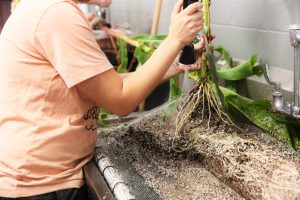
Sparking an Interest in Research
FRIPS Program allows first-year students an opportunity to get a first-hand look at plant research at MU.
Nov. 3, 2021
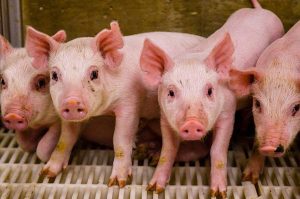
Groundbreaking Work
Randy Prather, Curators' Distinguished Professor in Animal Sciences, speaks about the latest pig kidney breakthrough.

Nov. 2, 2021
A Big Plan for a Small Berry
Andrew Thomas has big plans for a small berry. Thomas, research assistant professor in the Division of Plant Science and Technology in the College of Agriculture, Food and Natural Resources at the University of Missouri, has received a Specialty Crop Research Initiative (SCRI) grant from the U.S. Department of Agriculture for the project Moving American Elderberry into Mainstream Production and Processing. The award is for $5,345,255 over a four-year period. Elderberry is a native plant found all over the Midwest and eastern United States. Thomas, who has conducted elderberry research for 24 years at CAFNR’s Southwest Research, Extension…
Nov. 1, 2021
Building Staying Power
Mobile meat processing training centers will address labor shortages within meat processing industry.
Oct. 25, 2021
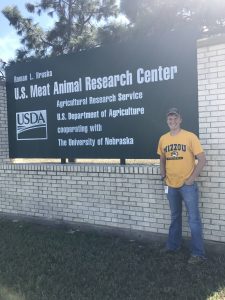
Preparing for the Next Step
Zach Duncan's time in CAFNR helped equip him for graduate school.
Oct. 18, 2021
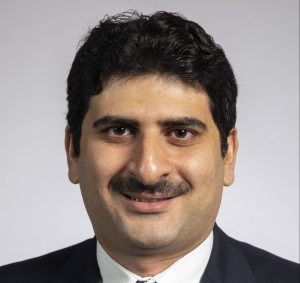
Ahmed Balboula Receives Outstanding Investigator Award
Ahmed Balboula, assistant professor in animal sciences, is working to understand how chromosome segregation is regulated in female gametes (oocytes). During the early stages of pregnancy, chromosome mis-segregation can result in aneuploidy (abnormal number of chromosomes in a cell), the leading genetic cause of miscarriages and congenital abnormalities. His work has implications for both animal and human health. Balboula recently received R35 grant (Outstanding Investigator Award) through the National Institute of General Medicine (NIGMS, NIH) totaling $1.9 million for a five-year period. Funding is for a project titled Mechanisms Underpinning Meiotic Spindle Formation and Behavior. Balboula…
Sep. 27, 2021
Taking a Chance
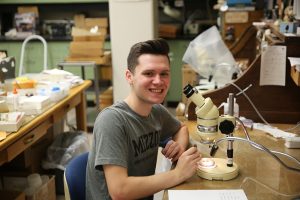
As a freshman, Mason Ward took a chance and applied to the Freshman Research in Plants (FRIPS) Program with the thought that he would give research a try. Ward wasn’t sure if research would be a major part of his collegiate career, but figured by pushing himself he would certainly learn something new. Now, three years later, Ward’s extraordinary research portfolio has earned him two undergraduate research awards from the Entomological Society of America (ESA). Ward earned the Undergraduate Student Achievement in Entomology award from the Plant-Insect Ecosystem (P-IE) section of the ESA, as well as…
Aug. 30, 2021
Solving Problems Through Research
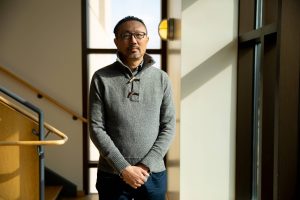
As an alum of the University of Missouri (MU), Chung-Ho Lin has worked for his alma mater his entire career in the College of Agriculture, Food and Natural Resources (CAFNR) in the School of Natural Resources. In that time, he’s become known as a problem solver of sorts, when it comes to a wide variety of research questions. Lin, who is a research associate professor in forestry, is also the lead scientist in charge of bioremediation and natural products research programs at the Center for Agroforestry. Bioremediation is a process used to treat contaminated media like water, soil and other…
Aug. 29, 2021
MU Plays Crucial Role in New NSF Artificial Intelligence Institute
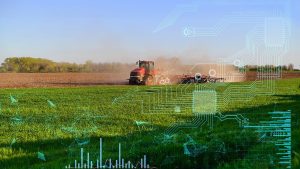
The U.S. National Science Foundation (NSF) has announced the establishment of the AI Institute for Resilient Agriculture (AIIRA), one of 11 new NSF National Artificial Intelligence Research Institutes that will work to advance AI technologies and their associated benefits to society. The AIIRA will be led by Iowa State University (ISU) and feature collaboration across eight institutions, including the University of Missouri. While the 11 AI Institutes will cover a wide range of AI technology and applications, the AIIRA will focus on a simulation technology that can create “digital twins” of real-world crops and farms, an approach that would provide…
Aug. 29, 2021
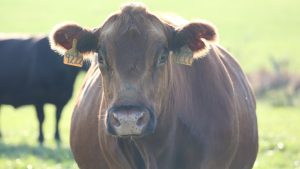
Cattle Losing Adaptations to Environmental Stressors, MU Researchers Find
As a fourth-generation cattle farmer, Jared Decker knows that cattle suffer from health and productivity issues when they are taken from one environment–which the herd has spent generations adapting to–to a place with a different climate, a different elevation or even different grass. But as a researcher at the University of Missouri, Decker also sees an opportunity to use science to solve this problem, both to improve the welfare of cattle and to plug a leak in a nearly $50 billion industry in the U.S. “When I joined MU in 2013, I moved cattle from a family farm in New…