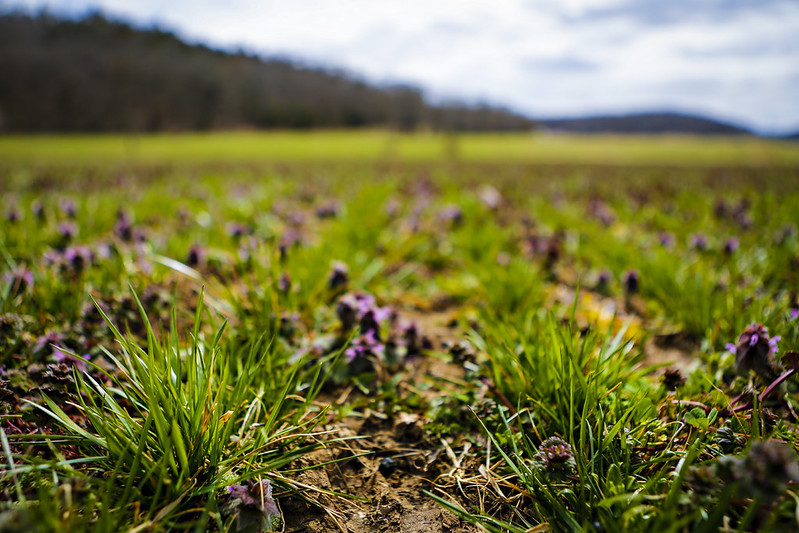
Tall fescue has sustained livestock operations for generations. Yet the same perennial grass that supports an estimated 17 million acres across the state can also come with risks for livestock producers.
Many older tall fescue stands contain a toxic endophyte associated with fescue toxicosis, a condition that can affect animal health, reproduction and performance. Because symptoms are not always immediately obvious, producers may experience performance losses long before they realize endophytes are to blame.
“All livestock producers running animals on Kentucky 31 tall fescue need to understand the risks and know how to mitigate those risks to lower the effect,” said Tim Schnakenberg, MU Extension field specialist in agronomy. “This is especially a concern for beef producers and equine owners.”
Balancing the benefits and challenges of tall fescue has driven decades of research and education at Mizzou. Much of that foundational work was led by retired state forage specialist Craig Roberts, who devoted most of his nearly 40 years at MU to studying fescue toxicosis.
Today, Schnakenberg and forage agronomy specialist Carson Roberts are among the MU Extension specialists continuing that legacy through producer education, on-farm recommendations and outreach programs.
“Programs that help farmers and ranchers better understand and manage endophyte issues include the Alliance for Grassland Renewal workshops and Missouri Grazing Schools,” Schnakenberg said. “Here we go into depth on the effects of tall fescue endophyte and how to mitigate those effects.”
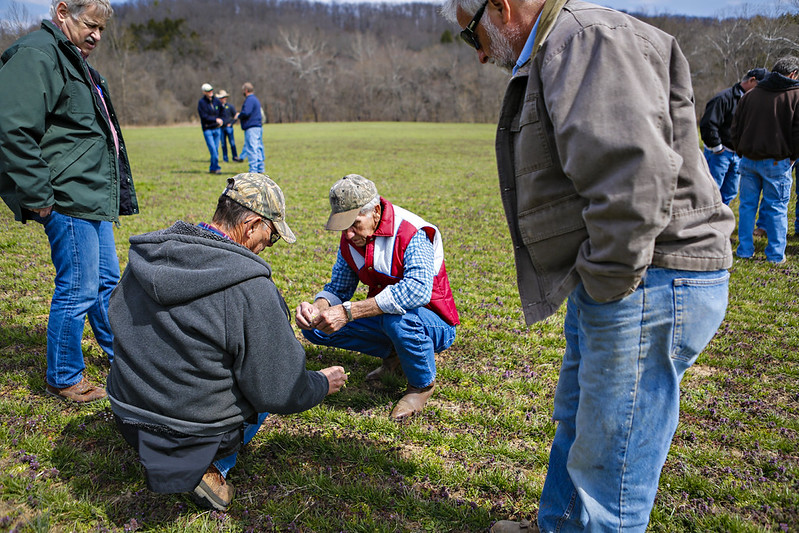
Beyond producer education, Schnakenberg said MU and collaborators at North Carolina State University have taken a leading role in evaluating the economics of converting toxic tall fescue stands to novel endophyte varieties. The novel varieties allow producers to maintain the productivity and persistence of tall fescue while reducing the risk of fescue toxicosis.
In addition, researchers found that endophyte can become concentrated in the lower two inches of growth in overgrazed pastures. The finding reinforces the importance of grazing management practices that limit livestock exposure to toxic compounds.
Roberts advises producers to manage pastures so animals primarily consume leaf material and avoid seedheads, stems and the lower portions of the plant.
“Another option is to completely remove toxic endophyte-infected tall fescue from the system and plant something else,” Roberts said. “Whether that’s a novel endophyte tall fescue or a different forage species like native warm-season grasses, producers have options.”
Over time, Roberts has seen growing interest in native warm-season grasses as producers look to diversify forage systems during the summer months, when toxic endophyte levels are often highest. A “near-perfect” system, he added, might keep a portion of land in tall fescue while shifting the remaining acres into native warm-season grasses or other warm-season forages.
Adding forage legumes such as red clover can further reduce livestock exposure to toxic compounds. Schnakenberg often recommends adding clover as a practical first step, noting that “dilution is part of the solution” when it comes to endophyte troubles.
“It’s all a whole-system approach,” Roberts said. “If you focus solely on fescue toxicity, some other aspects of your business might suffer. You’ve got to manage forage inventory, winter feeding and forage quality. Fescue toxicity is all just wrapped up in that.”
“There are a ton of redeeming qualities of tall fescue,” Roberts said. “it’s very hardy and resilient for the Missouri climate. It is extremely productive. More pounds of beef have likely been produced on tall fescue than any other single forage species in the United States.”