Plant Science and Technology

Aug. 21, 2018
David Stanley
Educational background…

Aug. 21, 2018
Kent Shelby
Educational background…
Aug. 21, 2018
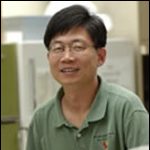
Wenping Qiu
Molecular interactions between grapevine and obligate biotrophic Uncinula necator Powdery mildew caused by the fungus Uncinula necator is the most destructive fungal disease in grapevines worldwide. U. necator thrives only on living grapevine tissues by getting nutrients through an elaborate feeding structure haustoria formed between fungus and epidermal cell. Research in the Qiu laboratory focuses on understanding molecular mechanisms underlying this intimate relationship between grapevine and U. necator. The lab conducts high throughput discovery and hypothesis-based research projects hopefully, to reveal key steps in the complex interactions that happen after fungal conidiospores start to germinate on the surfaces of…

Aug. 21, 2018
Melvin Oliver
The approach that I have developed is a combination of functional and comparative phylogenomics, a merging of genomics and phylogenetics, underpinned by a sound understanding of the morphology, phenology, physiology and molecular biology of the plants I have chosen to focus on. Using two phylogenetic approaches, ancestor-descendant comparisons and sister-group contrasts, my specific goals relate to identifying and understand the function of those genes and processes that are truly adaptive with regards to dehydration tolerance in plants. My work has focused on three primary models each uniquely positioned to experimentally address the adaptive aspects of dehydration tolerance. We…

Aug. 21, 2018
Robert Myers
Dr. Rob Myers is Director of the MU Center for Regenerative Agriculture and an Extension Professor in the Plant Science and Technology Division. In his leadership role with the Center for Regenerative Agriculture, he administers approximately $50 million in grant projects focused on helping farmers with cover crops, no-till, regenerative grazing, virtual fencing and other conservation approaches. His professional expertise encompasses sustainable and regenerative agriculture, soil health, conservation and cropping system diversification. He has conducted research, education and extension programs with many cover crops and alternative crops. He has also led or served with several…
Aug. 21, 2018
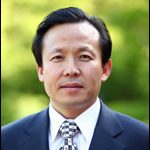
Jong Chan Hong
Functional Genomics of Plant Transcription FactorsJong Chan Hong’s lab has constructed Arabidosis transcription factor (TF) open reading frame genome (TF-ORFeome) in a highly efficient recombinational cloning system and is interested in the analysis of protein interaction networks involved in various plant developmental and stress responses. The protein-interaction network, named interactome, analysis will provide valuable information on the understanding of complex biological phenomena such as flowering time control and defense responses. The TF networks that are under investigation are 1) flowering time regulatory network that involve CONSTANS, a B-box zinc finger factor and flowering time (FT), 2) photomorphogenic control…

Aug. 21, 2018
Brenda Beerntsen
Educational background…

Aug. 20, 2018
Chin-Feng Hwang
Educational background…

Aug. 20, 2018
Ivan Baxter
Educational background…
Aug. 20, 2018
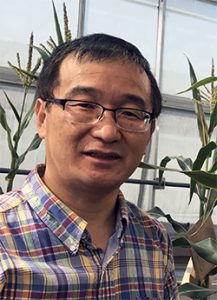
Bing Yang
Bing’s group has used rice as a workhorse to develop genome editing technologies and demonstrate their promising potential as biotech tools for basic and applied research in rice and other crop plants. With the increasingly available sequences of many plant genomes, technologies for genome editing have become the most promising and popular tools for scientists to understand such complex genomes and precisely and quickly manipulate them for good. Genome editing technologies allow precise, targeted genomic changes. TALENs and CRISPR/Cas represent the state-of-the-art genome editing technologies and hold immense promise for defining the genetic and molecular basis for valuable traits,…