Water
Sep. 16, 2021
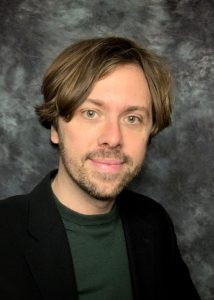
Michael Sunde
Sunde’s research focuses on using quantitative modeling, geospatial and remote sensing approaches to evaluate the impacts of stressors such as urbanization, deforestation and climatic pressures on the environment and to map ecosystems at large scales, with an emphasis on watershed hydrology. His work uses an array of geographic, climatic and remotely sensed data, along with machine learning and physically based models to produce information that can be of utility to planners and decision makers. Educational background…
June 4, 2020
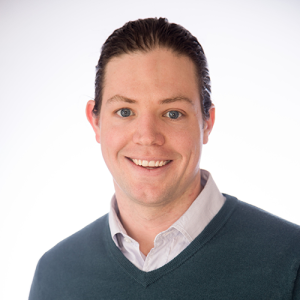
Morgan P. Davis
Davis’ research is centered around soil biogeochemistry in the context of ecological sustainability. The objective of his research is investigating nutrient and energy cycles in both managed and natural ecosystems. This work provides insights for improving sustainability and contributes to foundational biogeochemistry knowledge. He is particularly interested in nitrogen and carbon transformations in forested and agronomic ecosystems. Specific research interests include the following: soil greenhouse gas emissions, soil health, soil organic matter, cover crops, tillage management, nitrate leaching, microbial communities, denitrification, indirect nitrous oxide emissions, and riparian buffers. Educational background Courses taught…
Sep. 26, 2018
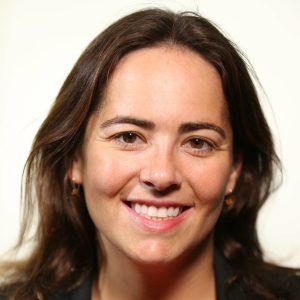
Robin M. Rotman
Educational background…
Jan. 9, 2018
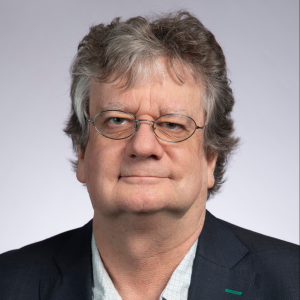
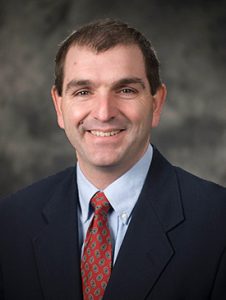
Robert Sharp
Sharp is a Chancellor’s Professor and Curators’ Distinguished Professor Emeritus of Plant Sciences at the University of Missouri (MU). He received his BS and Ph.D. (with Bill Davies) degrees from Lancaster University in the UK, and after postdoctoral work at the University of Illinois-Urbana (with John Boyer) and the University of California-Davis (with Ted Hsiao and Wendy Silk), joined the faculty at MU in 1986. His research career has emphasized the physiology of plant adaptation to water deficits (drought), with a primary focus on mechanisms of root growth regulation in maize (corn). In May 2021 he served as Chair…
Jan. 9, 2018
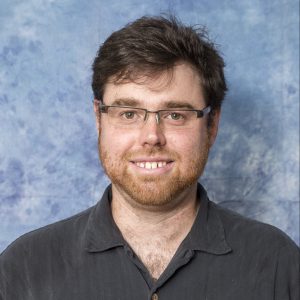
Kelly Nelson
Educational background…
Dec. 14, 2017
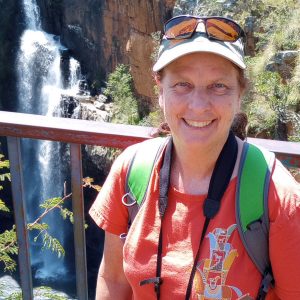
Jeffrey Wood
Wood’s research focuses on ecosystem science and the exchanges of gases and heat between the biosphere and atmosphere. There is specific emphasis on better understanding the factors controlling fluxes of carbon, water, and nitrogen between natural or managed systems and the atmosphere. Educational background Courses taught…
Dec. 14, 2017
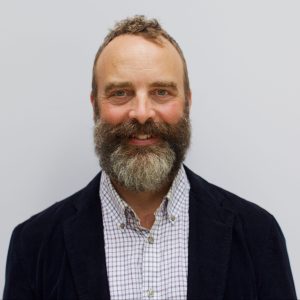
Joanna (Jodi) Whittier
Whittier focuses on applied research typically at landscape scales to assess habitat condition and the association between condition and community composition. She works collaboratively with stakeholders from across the U.S. to identify conservation opportunities based on current and future conditions. Educational background…
Dec. 14, 2017
Michael C. Stambaugh
Prior to becoming a scientist, Stambaugh worked as a forester for private industry and the federal government. Since 2010, his forestry research has received over $8 million in grant funding. He collaborates with the U.S. Forest Service, U.S. Fish & Wildlife Service, National Park Service, The Nature Conservancy, and multiple state natural resources organizations. He has been a National Geographic Explorer since 2010 and in 2023 was a Charles Bullard Fellow in Forest Research at Harvard Forest. Educational background Courses taught…

Dec. 14, 2017
Craig P. Paukert
Paukert is the Leader of the US Geological Survey, Missouri Cooperative Fish and Wildlife Research Unit in the School of Natural Resources. His research is in collaboration with state and federal agencies to help them with their research needs related to climate change adaptation strategies for fish and fisheries, conservation and management of large river fishes, and stream fish conservation at the local and landscape scale. Paukert has a Ph.D. from South Dakota State University, an M.S. from Oklahoma State University, and a B.S. From the University of Minnesota. Prior to arriving at MU in 2010, he worked with…
Dec. 14, 2017
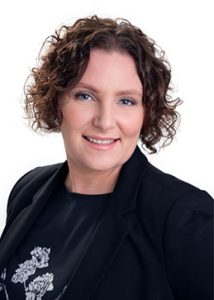
Rebecca North
Research in the North group is focused on addressing the question: What controls algal biomass of inland waters? North’s team focuses on the effects of multiple stressors on nutrient cycling, bioavailability, and primary production in Missouri water bodies with particular attention to the source and timing of nutrient loading and the response of the receiving water body. Ecosystem stressors include, but are not limited to: climate change, landscape modification (i.e., agricultural, urban, and industrial applications), eutrophication, and invasive species (i.e., zebra mussels). North’s research is conceptually driven and applies field, lab, and quantitative approaches to studying issues in watershed…
- « Previous
- 1
- 2
- 3
- Next »