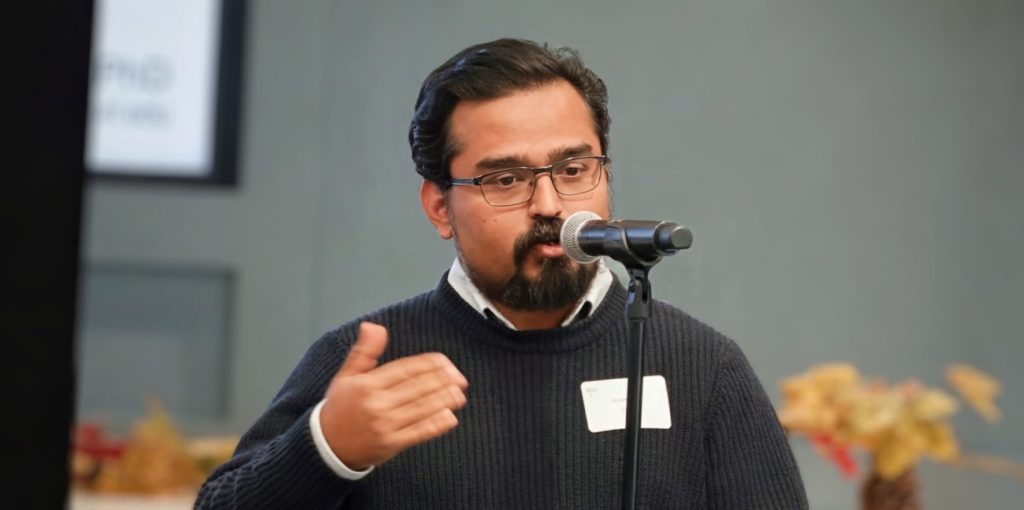
A breakthrough technology developed at Mizzou to quickly monitor a key indicator of health won the Medical Category at the “Create the Future” International Design Contest Nov. 7 in New York City.
Nilesh Salvi, a research scientist in the College of Agriculture, Food and Natural Resources’ Division of Food, Nutrition and Exercise Sciences, is developing a real-time, non-invasive blood viscosity sensor that continuously measures the “thickness” of blood, offering clinicians immediate insight into blood volume, viscosity and circulatory stability — key parameters in fluid resuscitation, shock management and mass-casualty triage.
For years, doctors have relied on vital signs such as heart rate, blood pressure, temperature and oxygen levels to monitor someone’s health. But Salvi believes one key metric has been overlooked: blood viscosity, or how thick or sticky blood is as it flows through the body.
Viscosity plays a hidden but crucial role in health. It’s linked to six of the top 10 leading causes of death in the United States, including heart disease, cancer and stroke.
Although falling short of the Grand Prize against six competitors, the device earned national recognition as a Category Winner in SAE Media Group’s international “Create the Future Design Contest,” sponsored by Intel, COMSOL and other industry leaders that celebrate engineering solutions improving global quality of life.
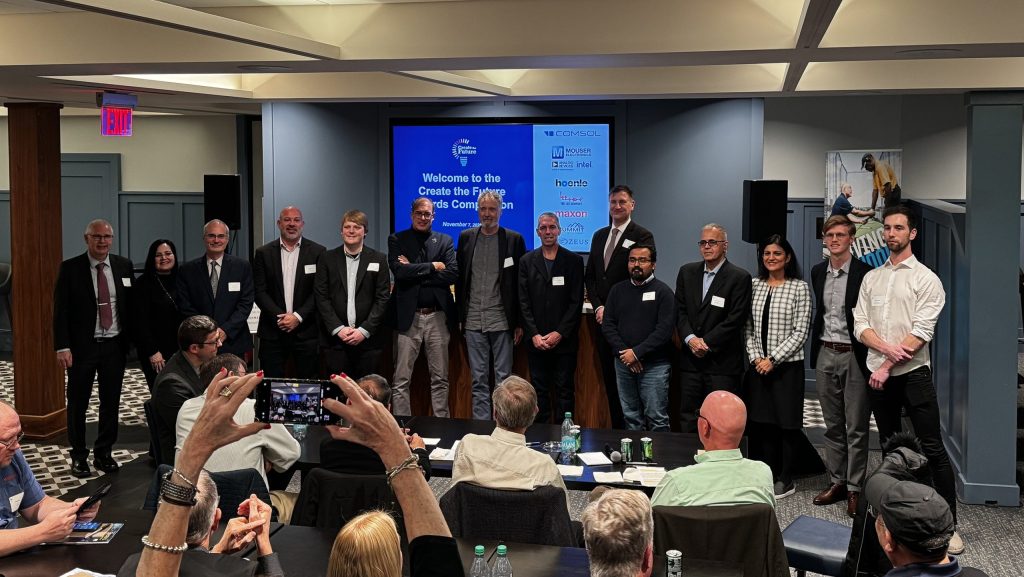
“The real prize is being able to share this vision with people who care about advancing lifesaving technologies,” Salvi said. “If our work can help medics or physicians make faster, better decisions under pressure, that’s what truly matters.”
The sensor could support field medics, emergency responders and critical care teams by providing a continuous stream of real physiological data — helping guide fluid resuscitation and monitor recovery in real time. Beyond trauma care, the technology may hold potential in renal and hematological health, where changes in blood viscosity and composition are early indicators of disease progression, Salvi said.
Blood viscosity is often the missing piece in understanding how the body responds to stress and treatment, said Jinglu Tan, Curators’ Distinguished Professor of Bioengineering and Director of Strategic Initiatives at CAFNR, who worked with Salvi on the project.
“By quantifying it continuously, we gain a window into circulatory dynamics that traditional metrics simply don’t provide.” Tan said. “It opens a new dimension in both acute and chronic care.”
Beyond its clinical relevance, the technology also unlocks tremendous opportunities for clinical research by providing real-time access to in vivo blood viscosity data, Salvi said.
“Such continuous monitoring could help uncover previously unseen patterns in complex, chronic and hard-to-manage conditions like high blood pressure,” he said.
This innovation reflects the University of Missouri’s strength in cross-disciplinary research by uniting expertise from engineering, medicine and agriculture to tackle some of the most complex challenges in human health and national medical readiness, Salvi said.
The Create the Future Design Contest was launched in 2002 by the publishers of Tech Briefs magazine to help stimulate and reward engineering innovation. The annual event has attracted more than 15,000 product design ideas from engineers, entrepreneurs and students in 100+ countries worldwide.