Stories
May 7, 2020
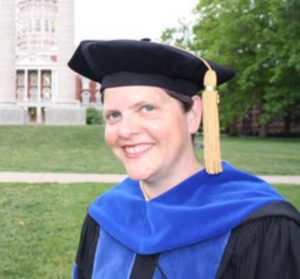
Lisa Groshong Earns MU Distinguished Dissertation Award – Discipline Winner
Lisa Groshong is being honored by the MU Graduate School with the MU Distinguished Dissertation Award for her dissertation titled “Looking Broadly and Deeply into Perceptions of Local Climate Change Impacts Among Visitors to Missouri State Parks.” This work was supervised by Sonja Wilhelm Stanis, associate professor in the School of Natural Resources. The results of Lisa’s research suggest opportunities for state park managers to take action toward locally oriented climate change mitigation, education and communication. Groshong is currently a postdoctoral fellow in the School of Natural Resources at the University of Missouri.
May 7, 2020
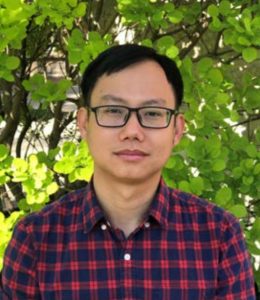
Man Huynh Honored with Postdoctoral Research Award
Man Huynh, a postdoctoral fellow in Plant Sciences, has received the Postdoctoral Research Award from the MU Graduate School. He developed an artificial diet to address the impact of northern corn rootworm. This pest is devastating to maize crops across North America. This research led to multiple first-authored publications, external funding and a commercially-available diet in partnership with Frontier Agricultural Sciences. His advisor, Debbie Finke, associate professor in the Division of Plant Sciences, shared this sentiment in her nomination letter for the award: “Dr. Huynh is a selfless researcher who takes the time to teach and train others, including colleagues…
May 7, 2020
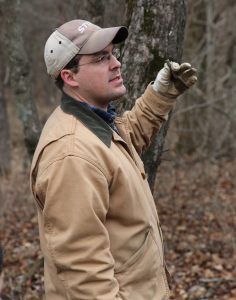
Ben Knapp Earns Purdue Forestry and Natural Resources Outstanding Young Alumni Award
The Outstanding Young Alumni Award recognizes the accomplishments of individuals who have excelled in professional and civic accomplishments and have graduated from Purdue FNR within the last 15 years. Ben Knapp, who earned his bachelor’s degree in forestry from Purdue in 2003, is an associate professor of silviculture in the School of Natural Resources at the University of Missouri. After completing his master’s and doctorate degrees at Clemson in 2005 and 2012 respectively, Knapp began teaching at Missouri as a tenure-track assistant professor. In 2018, he was promoted to associate professor. He teaches both undergraduate and graduate courses in silviculture…

May 6, 2020
Q&A With Drew Anderson
What are your job duties/job responsibilities in the College of Agriculture, Food and Natural Resources? I am the research specialist at Baskett Research Center in Ashland. The position is a “jack of many trades” situation, which I really enjoy. Much of the work that I do is collecting data and measurements for ongoing projects such as the National Atmospheric Deposition Program, AmeriFlux, and research from both faculty and students. I also handle outreach and communications, maintain the trails and grass areas, and make maple syrup. How long have you worked in CAFNR? I started working for…
May 6, 2020
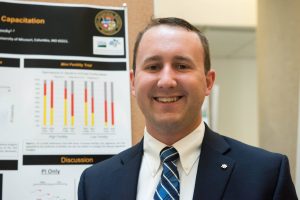
Karl Kerns Honored with Distinguished Dissertation Award
Karl Kerns, a postdoctoral fellow in animal sciences, has received the MU Distinguished Dissertation Award from the Graduate School as part of the Sixth Annual Graduate and Postdoctoral Award Ceremony. Kerns’ dissertation, “Zinc Ion Fluxes on the Pathway to Mammalian Sperm Fertilization Competency,” was supervised by Peter Sutovsky, professor of animal sciences. The research used a combination of new techniques to explain sperm zinc ion fluxes and develop a new sperm fertilization competency test. The test has been submitted for international patenting by the University of Missouri. The findings from Kerns’ dissertation have been published in the highly regarded Nature…
May 5, 2020
Making the Cut
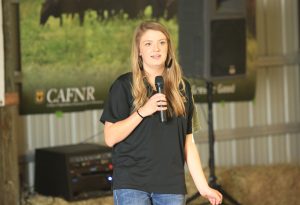
In 2015, Jared Decker, an associate professor in the Division of Animal Sciences and state beef Extension specialist, received a $3 million grant from the United States Department of Agriculture focused on matching cattle to their best environments so producers can make educated decisions about which animals are going to be most productive for them. Harly Durbin and Troy Rowan (research highlighted here) came to the University of Missouri as graduate research assistants in 2016 to work with Decker on the grant. Durbin’s part of the project has been focused on data collection and organization related to hair…
May 4, 2020
Livestock Legacy
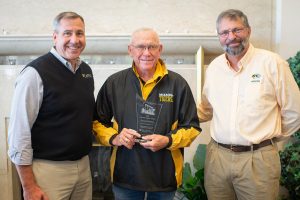
As a student in the then-College of Agriculture at the University of Missouri in the late ‘50s and early ‘60s, Everett Forkner was able to attend an international competition in Chicago as part of the Mizzou livestock judging team. There he saw the Saddle & Sirloin portrait gallery for the first time. “I was really impressed,” Forkner said of seeing the great line of portraits. “Never in my wildest imagination would I have ever thought that my portrait could be hung with that group of people.” In November, Forkner will join those giants of the livestock industry,…
May 3, 2020
Contributing to Research
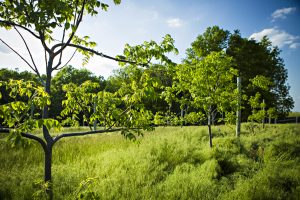
For more than 20 years, the Center for Agroforestry at the University of Missouri, has served as one of the world’s leading centers contributing to the science underlying agroforestry, which is the science and practice of intensive land-use management combining trees and shrubs with crops or livestock. Agroforestry practices help landowners to diversify products, markets and farm income; improve soil and water quality; sequester carbon; reduce erosion, non-point source pollution and damage due to flooding; and mitigate climate change. The Center for Agroforestry’s Chung-Ho Lin, an associate research professor, and his lab are currently looking at how…
May 3, 2020
Gathering Preliminary Data
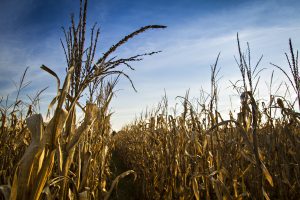
The U.S. Agricultural Market Outlook is prepared annually by economists with the Food and Agricultural Policy Research Institute (FAPRI) and MU Agricultural Markets and Policy (AMAP) and is updated each August. FAPRI Director Pat Westhoff said the report gives policymakers, farmers, agribusinesses and the public an overview of the state of the U.S. farm economy. The market projections it contains can be useful to farmers making production choices, to policymakers trying to decide how to respond to agriculture issues, to lenders who must decide whether to make loans and to agribusinesses making investment decisions. FAPRI released its most recent…

April 20, 2020
Anita Carter Receives Chancellor’s Outstanding Staff Award
Anita Carter, program/project support coordinator in the School of Natural Resources, was awarded the Chancellor’s Outstanding Staff Award in the Part-Time/Temporary category. This award is presented to a staff member who exemplifies the university’s values through temporary or part-time employment and consistently display characteristics that are valued and appreciated by their coworkers. They lead by example, motivate those around them, demonstrate compassion and bring innovative ideas to their teams.