Stories
Jan. 13, 2022
Central Missouri Research, Extension and Education Center Director Named
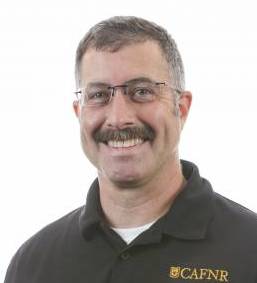
Dusty Walter has been named director of the Central Missouri Research, Extension and Education Center (REEC), effective Tuesday, Feb. 1.

Jan. 12, 2022
A Focus on Food, Fire & Agroforestry
Free, virtual Agroforestry Symposium scheduled for Jan. 24
Jan. 11, 2022
New Director Joins Southwest Research, Extension and Education Center
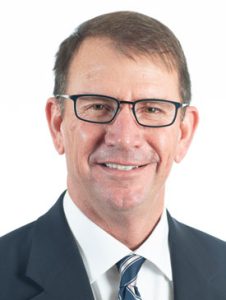
Jay Chism joins the Southwest Research, Extension and Education Center (SW-REEC), one of the four research, Extension and education centers of the Missouri Agricultural Experiment Station in the College of Agriculture, Food and Natural Resources (CAFNR), on Jan. 24 as the director. Chism is no stranger to the southwest Missouri area, as he has served as the Southwest Regional Director for University of Missouri Extension for the past nine years. “I am excited to share the innovation and research that is being done at the SW-REEC with farmers in Southwest Missouri. I can’t wait to join this…
Dec. 21, 2021
Interdisciplinary Plant Group Celebrates 40th Year
Established in 1981, the Interdisciplinary Plant Group (IPG) celebrated its 40th anniversary in 2021. The IPG is a community of University of Missouri (MU) faculty, graduate students, postdoctoral fellows and professionals pursuing transformative ideas in the field of plant biology. The group seeks to encourage cooperation between scientists engaged in plant molecular biology, physiology, biochemistry, genetics, biotechnology, evolution, ecology and computer science. In the 1970s, MU plant biologists already had a loose association for seminars and to share resources. In 1981, the group received the Weldon Spring Endowment, a competitive grant proposal, that helped formalize the program. The…
Dec. 20, 2021
Dain Jacobs Receives the American Heart Association Predoctoral Fellowship
Dain Jacob, doctoral student in Nutrition and Exercise Physiology, has received the prestigious American Heart Associate (AHA) Predoctoral Fellowship. The purpose of this fellowship is to enhance the integrated research and clinical training of promising students who are in a predoctoral or clinical health professional degree training program. Jacob is a doctoral student in the Limberg lab.

Dec. 14, 2021
An Untapped Industry
Maple syrup production is most known in the Northeastern United States, but is there a potential maple industry in the lower Midwest? Hannah Hemmelgarn, assistant program director of the Center for Agroforestry, recently received a grant totaling $473,481 for the project, Putting Maple on the Map in the Lower Midwest, to explore just that.

Dec. 14, 2021
Potential for a Warmer Winter
Tony Lupo, a professor of atmospheric science in the University of Missouri College of Agriculture, Food and Natural Resources (CAFNR), said this past fall – the months of September, October and November – was the sixth warmest in Missouri since the state began keeping records in 1889.
Dec. 12, 2021
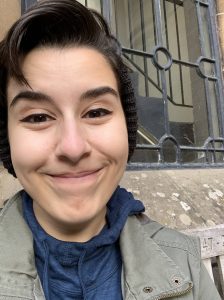
An Innovative Study Abroad Program
Nix Cannady is working toward their veterinary medicine degree through the FEEPASS Programme at the University of Glasgow.
Dec. 12, 2021
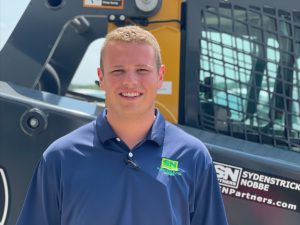
Building his own degree
Agriculture program allowed Chase Monte to combine his interest areas into one degree.
Dec. 12, 2021
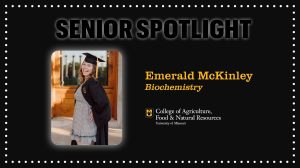
Senior Spotlight: Emerald McKinley
McKinley will graduate with a degree in biochemistry.