Celebrating outstanding faculty and scientists from the College of Agriculture, Food and Natural Resources (CAFNR) whose nationally recognized research has made a lasting impact.
Hall of Heroes
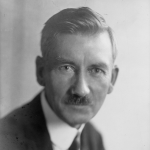
Curtis F. Marbut (1863–1935)
Developed first formal soil classification system in the U.S.
- Translated pioneering Russian soil science into English.
- First Director of USDA’s Soil Survey Division.
- Mapped U.S. soils and influenced global soil studies.
Curtis Marbut was born and raised in Barry County, Missouri, and earned a bachelor’s degree from the University of Missouri in 1889. He did graduate work in geology and physiography at Harvard University and in Europe. He was on the faculty of the University of Missouri from 1895 to 1910 in the Department of Geology. He developed the first formal soil classification system for the United States. Marbut translated into English the German edition of the pioneering Russian work on soils. He became the first Director of the Soil Survey Division of the USDA in 1913, which mapped soils of the U.S. He was about to begin preliminary study of the soils of China when he died of pneumonia in 1935.
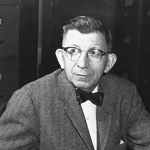
William A. Albrecht (1888–1974)
Foremost authority on relation of soil fertility to health
- Linked soil quality to human and animal nutrition.
- Laid the groundwork for modern organic and sustainable farming practices.
- Developed the “Albrecht Method” for soil management.
William A. Albrecht was on the faculty of the University of Missouri from 1916 to 1959. He was internationally recognized for pioneering work in soil organic matter properties, nitrogen fixation and his progressive insights on the relationship of soil fertility to animal and human nutrition and health. He worked on linkages among soil fertility, soil quality, as well as food and forage quality. His research ushered in the idea of organic/sustainable agriculture. Albrecht became President of the Soil Science Society of America in 1938. He left a rich legacy, including current concepts in soil health, use of the ‘Albrecht Method’ for soil management, and many well-trained students who have carried on his tradition of excellence and service.
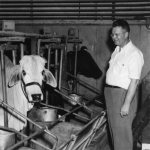
Charles W. Turner (1897–1975)
Pioneer in endocrinology of milk secretion, authored first modern textbook on comparative analysis of mammary glands
- Authored the first modern textbook on mammary gland physiology.
- Investigated prolactin and lactogen’s roles in milk production.
- Used radioactive isotopes to study thyroid function and milk yield.
Charles W. Turner was a distinguished dairy husbandry faculty member at the University of Missouri for 48 years. Turner focused on the endocrinology of milk secretion, and, along with his students, were among the first to investigate the physiology of prolactin. This work examined the development of the mammary gland during the early embryonic state, puberty, pregnancy, lactation and involution. These studies also examined the role of the hormone lactogen, which stimulates milk secretion, and several other hormones of the anterior and posterior pituitary glands that play a role in reproduction and lactation. Radioactive isotopes were used to study the rate of thyroxine production by the thyroid gland and the effects on milk yields.
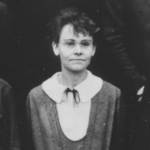
Barbara McClintock (1902–1992)
Nobel Prize recipient, maize scientist & cytogeneticist
- Developed a method to distinguish maize chromosomes, founding cytogenetics.
- Discovered the breakage-fusion-bridge cycle and transposable elements.
- Nobel Prize in Medicine or Physiology (1983).
Barbara McClintock was the first to develop a method to distinguish each of the 10 chromosomes of maize, initiating the field of cytogenetics. She first visited the University of Missouri in 1931 at the invitation of Lewis Stadler to examine the chromosomes of maize subjected by him to X-irradiation. She discovered in these materials many chromosomal changes that eventually led to an understanding of a number of genetic concepts. She later joined the faculty at the University of Missouri, in 1936. During her faculty appointment she discovered the so-called breakage-fusion-bridge cycle that led to the concept of the protective structure at the ends of normal chromosomes called the telomere. After her departure from Mizzou in 1941, she discovered transposable elements, for which she was awarded the Nobel Prize in Medicine or Physiology in 1983. In her Nobel lecture, she acknowledged her visit to Missouri in 1931 as the beginning of the path to discovery of transposable elements.
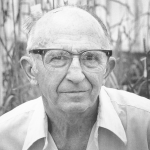
Ernest Robert Sears (1910–1991)
Pioneer of plant genetics, founder of chromosome engineering in wheat
- Transferred agronomic traits from wild relatives to cultivated wheat.
- Co-recipient of the Wolf Prize in Agriculture (1986).
- Honored with the Sears Plant Growth Facility namesake at Mizzou.
Ernie Sears received his Ph.D. from Harvard University in 1936 and soon after took up a position with the USDA on the University of Missouri campus where he worked on wheat genetics for the next 55 years, until his death. Sears was a pioneer of methods to transfer useful agronomic traits into cultivated wheat from wild relatives. For example, he did seminal work in developing wheat varieties resistant to a variety of important pathogens, as well as developing insect-resistant cultivars. Along with Sir Ralph Riley, he is considered one of the key founders of chromosome engineering and plant breeding. In recognition of this, he and Riley were awarded the Wolf Prize in Agriculture in 1986. Ernie worked closely in the lab with his wife, Lotti Sears, and their partnership was recognized by the University of Missouri by naming of the Ernest R. and Lotti M.S. Sears Plant Growth Facility on campus.
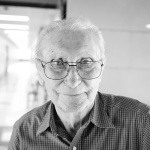
Boyd O’Dell (1916–2019)
Biochemistry trailblazer whose foundational work helped develop hypertensive drugs, cancer treatments
- Linked copper deficiency to blood vessel ruptures and emphysema.
- Discovered zinc’s role in nerve function and blood clotting.
- His work led to anti-hypertensive drugs and cancer treatments.
Boyd O’Dell was a leading researcher in nutrition and biochemistry of two closely related trace element nutrients, copper and zinc. He was the first to show that a copper deficiency caused major blood vessel ruptures in poultry. O’Dell’s work with copper extended to lung tissue, where he identified copper deficiencies that could be linked to developmental emphysema and was also in the causes of Parkinson’s disease in humans. O’Dell’s research on zinc established that phytate in seeds and grains prevent zinc absorption. He discovered that zinc deficiency contributed to peripheral nerve defects and clotting ability of blood. His work with zinc and angiotensen-converting enzyme was fundamental to the design of many anti-hypertensive drugs. Additionally, his studies with folic acid have led to the development of compounds such as aminopterin and methotrexate for the treatment of leukemia and other forms of cancer.
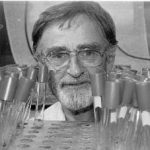
George Rédei (1921–2008)
Established Arabidopsis as a model system for plant genetics
- Advanced mutagenesis research with Arabidopsis thaliana.
- Published widely used genetics textbook.
- Donated more than 6,700 specimens to the Arabidopsis Biological Resource Center.
George Rédei was born in Vienna but raised in Hungary, where he lost his family and farm during WWII. However, he subsequently succeeded in obtained his Ph.D. and in the mid-1950s started working with Arabidopsis thaliana, which a small group of scientists had started to use as a model system due to its relatively small genome, short life cycle, high seed yield and ease of crossing and cultivation. At this time, he started to experiment with mutagenesis of Arabidopsis, starting with X-rays (following on the seminal work of T.H. Morgan in fruit flies). In 1957, he succeeded in emigrating to the U.S. where he joined the University of Missouri Department of Genetics (later Agronomy) as an Assistant Professor. He inherited the old lab of Barbara McClintock in Curtis Hall, as well as the original X-ray machine used by L.J. Stadler. From the period of 1957-1967, work in his laboratory established A. thaliana as a powerful genetic system for plants, making many seminal discoveries using this system. He published a textbook ‘Genetics,’ which was widely used domestically and internationally. In the late 1980s, other researchers adopted Arabidopsis as the model genetic system for plants and were able to make use of the various resources and tools that Redei had developed for research with this plant. During his career, Redei published 250 research papers and, upon his retirement, deposited 6,728 specimens in the Arabidopsis Biological Resource Center, which have continued to serve the plant community. As recognition of his life work, Rédei was elected foreign member of Hungarian Academy of Sciences in 1990. In 2004, the University of Missouri dedicated a section of their local Plant Growth Facilities to him.
Current Nominating Committee
- Gary Stacey (Chair)
- Stephen Anderson (School of Natural Resources)
- Perry Gustafson (ARS, retired)
- Doug Randall (Biochemistry, retired)
- Randy Prather (Animal Sciences)
- Michelle Enger (CAFNR Marketing & Communications)
- Shibu Jose (CAFNR Office of Research)
About
Inductees must:
- Have nationally/internationally recognized scientific impact.
- Worked at Mizzou for a period of their career, associated with CAFNR, and retired for at least five years.
- Exhibit good character and citizenship.
Nomination Process
- Who can nominate? CAFNR Division Directors.
- Deadline: March 15 each year.
- How to submit: Use the nomination form on the CAFNR website.
- Support materials: Up to two letters (maximum of two pages each).
- Announcement: Inductees revealed in June.
Selection Procedure
- Reviewed by a six-member nominating committee appointed by the CAFNR Dean.
- Must receive a two-thirds vote to be inducted.
- Nominations remain active for three years and can be resubmitted with new info.
Recognition
- Inductees featured on the CAFNR Hall of Research Heroes webpage and on the wall display that includes photos and highlights of their contributions.