Graduate Coordinators

Sep. 3, 2019
Shuangyu Xu
Educational background Courses taught…

Jan. 30, 2019
Rebecca Mott
Educational background…
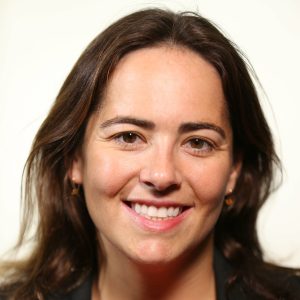
Sep. 26, 2018
Robin M. Rotman
Educational background…
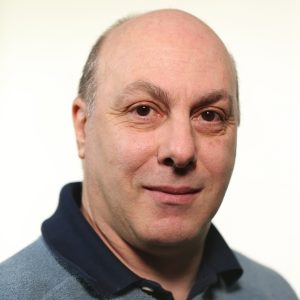
Feb. 4, 2018
Neil I. Fox
Educational background Courses taught…
Jan. 9, 2018
Reid Smeda
Educational background Courses taught…
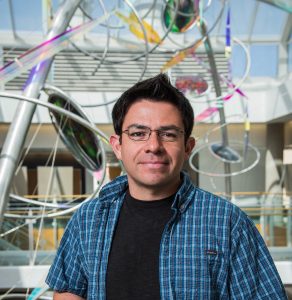
Jan. 8, 2018
David Mendoza-Cózatl
The main goal of the lab is to understand how plants take up, accumulate and transport trace metals between roots and leaves and from leaves to seeds. Plants and seeds are the main dietary source of essential nutrient metals such as zinc (Zn), iron (Fe), manganese (Mn) and copper (Cu). However, plant-based products are also the main entry point for toxic elements like cadmium (Cd), arsenic (As), mercury (Hg) and lead (Pb). Some of the detrimental effects of heavy metals on human health have been linked to diabetes, hypertension, myocardial infarction, diminished lung function and certain types of cancer.

Dec. 14, 2017
Craig P. Paukert
Paukert is the Leader of the US Geological Survey, Missouri Cooperative Fish and Wildlife Research Unit in the School of Natural Resources. His research is in collaboration with state and federal agencies to help them with their research needs related to climate change adaptation strategies for fish and fisheries, conservation and management of large river fishes, and stream fish conservation at the local and landscape scale. Paukert has a Ph.D. from South Dakota State University, an M.S. from Oklahoma State University, and a B.S. From the University of Minnesota. Prior to arriving at MU in 2010, he worked with…
Nov. 2, 2017
Hong S. He
Educational background Courses taught…

Aug. 27, 2017
Theodoros Skevas
Educational background Courses taught…
Aug. 23, 2017
Peter V. Cornish
Research in our laboratory is primarily focused on understanding the complexities of ribosome function using a variety of biophysical methods including NMR and single molecule techniques. One of our projects is in understanding translational regulation in particular the mechanism of recoding where the ribosome shifts reading frame due to the presence of specific structures within the mRNA. Recoding has been observed in all forms of life and has been shown to be essential for the viability of many viruses including HIV-1 and SARS coronavirus. We are also contributing to the ongoing effort of developing antiviral small molecules that specifically…
- « Previous
- 1
- 2
- 3
- Next »