Atmosphere & Climate
July 30, 2024
Qian Liu
Climate factors and extreme weathers require accurate and effective detection, segmentation, and estimation, as well as the in-depth understanding of physical and atmospheric process. The increasing availability of remote sensing images, ground-based observations, and model simulations along with the rapid progress of computing technologies have provided us the unprecedented opportunity to better satisfy the above-mentioned requirements. In my research, beyond the traditional methodology for environmental factors and natural disasters analytics, I pursue high-efficient and automatic approaches by developing a series of AI and spatiotemporal methodologies and frameworks to detect, retrieve, classify and analyze climate factors such as cloud, air…
July 15, 2024
Lijing Gao
Gao was trained as an agricultural science communication specialist and an environmental sociologist, focusing on the interconnectedness of agricultural systems with socio-economic, political, and ethical decisions. Her current research focuses on understanding perceptions of livestock biotechnology, particularly genome editing. Gao employs a mixed-method approach. Educational background Courses taught…

Aug. 29, 2023
Zachary Leasor
Zack is an assistant professor in climate science within the School of Natural Resources. He also works as State Climatologist and director of the Missouri Climate Center. He serves on panels dealing with adverse weather conditions such as drought and flooding. He also works with the National Weather Service offices and regional climate services to provide climate data and prepare special summaries of significant weather and climate events. Originally from Louisville, Ky., Zack spent the last several years living in Columbus, Ohio, before moving to Missouri during the summer of 2023. Zack received a bachelor’s degree in meteorology,…
Feb. 4, 2018
Neil I. Fox
Educational background Courses taught…
Dec. 14, 2017
Jeffrey Wood
Wood’s research focuses on ecosystem science and the exchanges of gases and heat between the biosphere and atmosphere. There is specific emphasis on better understanding the factors controlling fluxes of carbon, water, and nitrogen between natural or managed systems and the atmosphere. Educational background Courses taught…
Dec. 14, 2017
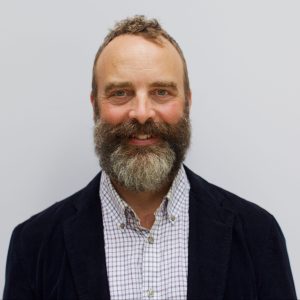
Michael C. Stambaugh
Prior to becoming a scientist, Stambaugh worked as a forester for private industry and the federal government. Since 2010, his forestry research has received over $8 million in grant funding. He collaborates with the U.S. Forest Service, U.S. Fish & Wildlife Service, National Park Service, The Nature Conservancy, and multiple state natural resources organizations. He has been a National Geographic Explorer since 2010 and in 2023 was a Charles Bullard Fellow in Forest Research at Harvard Forest. Educational background Courses taught…
Nov. 13, 2017
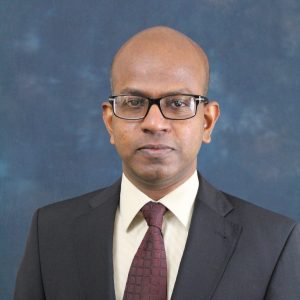
Noel R. Aloysius
Noel Aloysius’ research and teaching focus on terrestrial hydrology, watershed biophysical processes and environmental informatics. Noel’s research group investigates how climate and weather, landscapes and land management drive precipitation-runoff processes and fate and transport of pollution at field-, watershed- and continental-scale river basins. His group utilizes field observations, long-term hydro-climate data, numerical and statistical models to examine the movement of water, solutes and sediments in response to environmental change and human management. Noel is a member of the Gulf Hypoxia Task Force SERA-46 research group representing the University of Missouri. The SERA-46 group is a consortium of twelve Land…
Nov. 2, 2017
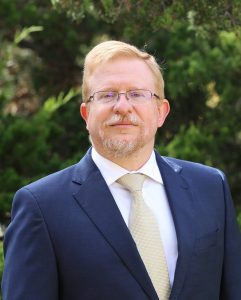
Patrick S. Market
The morphology and evolution of extratropical cyclones, jet streak-frontal interactions, heavy rainfall and snowfall forecasting, and precipitation efficiency, are primary research areas. Educational background Courses taught…
Nov. 2, 2017
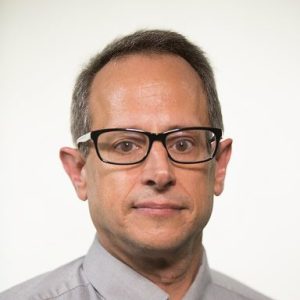
Anthony Lupo
Lupo, Professor of Atmospheric Sciences, Atmospheric Science Program, University of Missouri (MU). He has a BS in Meteorology (State University of New York at Oswego, 1988), and an M.S. and Ph.D. in atmospheric science (Purdue University, 1991, 1995). His research is in large-scale atmospheric dynamics and teleconnections, climate dynamics and variability, tropical meteorology, and climate change including modeling, and has more than 160 peer-reviewed publications. He is a member of the American Meteorological Society (Certified Consulting Meteorologist [CCM] #660), and the National Weather Association. He was a Fulbright Scholar during summer 2004, AY 2014-2015, and October 2017 to Russia.

Oct. 26, 2017
Eric Aldrich
Educational background Courses taught…