Fisheries & Wildlife
Aug. 6, 2025
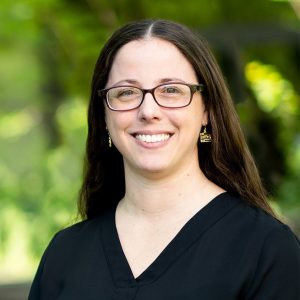
Christine C. Brodsky
Christine Brodsky is an Assistant Professor of Urban Ecology at the University of Missouri in the School of Natural Resources. She holds a Ph.D. from the University of Missouri, M.S. from the University of Delaware, and B.S. from the University of Massachusetts. Her dissertation research was conducted within the Baltimore Ecosystem Study, a Long-Term Ecological Research (LTER) program. After completing her Ph.D., she worked as a faculty member within Pittsburg State University’s Biology Department. She is a Certified Wildlife Biologist and currently serves on the Advisory Board for the Urban Biodiversity and Design (URBIO) international network. Brodsky also has…
July 17, 2025
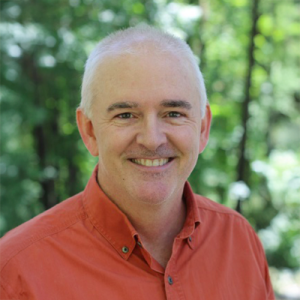
Rick Relyea
Educational background Courses taught…
Aug. 1, 2022
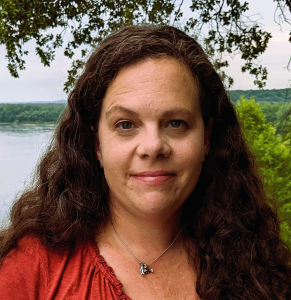
Allison A. Pease
Pease is an aquatic ecologist who studies how flow alteration, climate change, and other habitat impacts affect river fish populations and communities. Her work is international in scope, with collaborative research in Mexico, Paraguay, and the Republic of Congo. She and her students also carry out local work in the U.S. with clear implications for better understanding and predicting effects of environmental change on fish populations and aquatic food webs. Educational background Courses taught…
Aug. 26, 2021
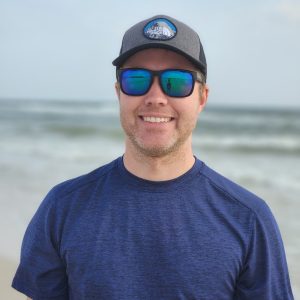
Jacob Westhoff
The research conducted by Jacob Westhoff primarily focuses on the applied needs of state and federal cooperators as part of the Missouri Cooperative Fish and Wildlife Research Unit. These needs often include study of life history, distribution, habitat use, environmental tolerances, and general ecology of aquatic organisms. Educational background…
July 15, 2019
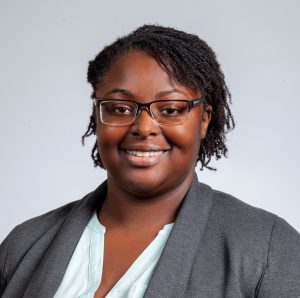
Samniqueka Joi-Weaver Halsey
Educational background Courses taught…
Dec. 14, 2017
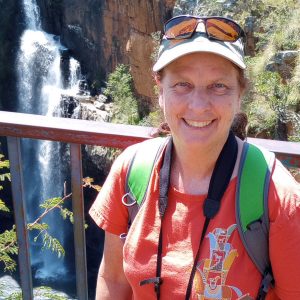
Joanna (Jodi) Whittier
Whittier focuses on applied research typically at landscape scales to assess habitat condition and the association between condition and community composition. She works collaboratively with stakeholders from across the U.S. to identify conservation opportunities based on current and future conditions. Educational background…
Dec. 14, 2017
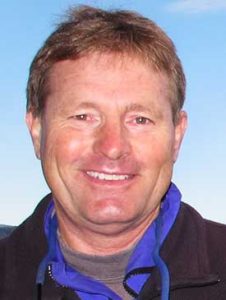
Robert Pierce
Educational background…
Dec. 14, 2017
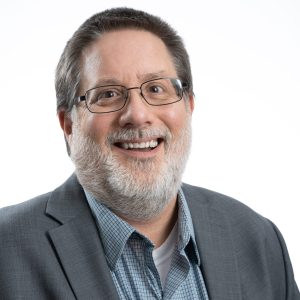
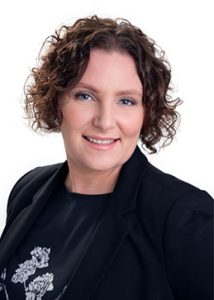
Craig P. Paukert
Paukert is the Leader of the US Geological Survey, Missouri Cooperative Fish and Wildlife Research Unit in the School of Natural Resources. His research is in collaboration with state and federal agencies to help them with their research needs related to climate change adaptation strategies for fish and fisheries, conservation and management of large river fishes, and stream fish conservation at the local and landscape scale. Paukert has a Ph.D. from South Dakota State University, an M.S. from Oklahoma State University, and a B.S. From the University of Minnesota. Prior to arriving at MU in 2010, he worked with…
Dec. 14, 2017
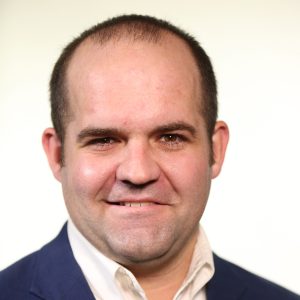
Rebecca North
Research in the North group is focused on addressing the question: What controls algal biomass of inland waters? North’s team focuses on the effects of multiple stressors on nutrient cycling, bioavailability, and primary production in Missouri water bodies with particular attention to the source and timing of nutrient loading and the response of the receiving water body. Ecosystem stressors include, but are not limited to: climate change, landscape modification (i.e., agricultural, urban, and industrial applications), eutrophication, and invasive species (i.e., zebra mussels). North’s research is conceptually driven and applies field, lab, and quantitative approaches to studying issues in watershed…
Nov. 9, 2017
Jared E. Decker
IDENTIFYING LOCI RESPONDING TO SELECTIONIn 2012 Decker published a method, now called Generation-Proxy Selection Mapping, to identify loci responding to current selection. In this analysis, birth date (as a surrogate to generation number) is fit as the dependent variable in a mixed model equation. Variants that have changed in frequency rapidly due to selection are strongly associated with birth date, thus the method identifies regions under selection. The mixed model equations correct for demography, relatedness, and population structure within the data. We have previously used this method in Angus cattle using approximately 45,000 SNPs. In…