Ben Walters is changing what it looks like to be an undergraduate student with a passion for research at the University of Missouri. His academic journey has followed a unique timeline that has led him to where he is today.
“I want to be an example,” Walters said.
Walters is a U.S. Navy veteran who has returned to school in pursuit of exploring his passions. He’s double majoring in environmental sciences with an emphasis in land and soil, and natural resource and science management with an emphasis in forest resources.
“I grew up in a working-class family, and I spent a lot of my time outside,” he said. “In the woods or running through creeks.”
Mapping what’s beneath the forest floor
Walters’s lifelong passion for forests has sparked his passion for studying them – specifically their underground network.
“Through the use of mycorrhizae, trees are able to share resources,” he said.
Mycorrhizae are a living structure that facilitates nutrient exchange between hosts. They create symbiotic relationships between soil fungi and plant roots. The fungi are responsible for enhancing plant growth, improving drought resistance and other processes that benefit plants.
“Up to 97% of all things green that you see outside rely on mycorrhizae,” Walters said.
Walters is doing research that focuses specifically on mapping the mycorrhizae impacting White Oak trees.
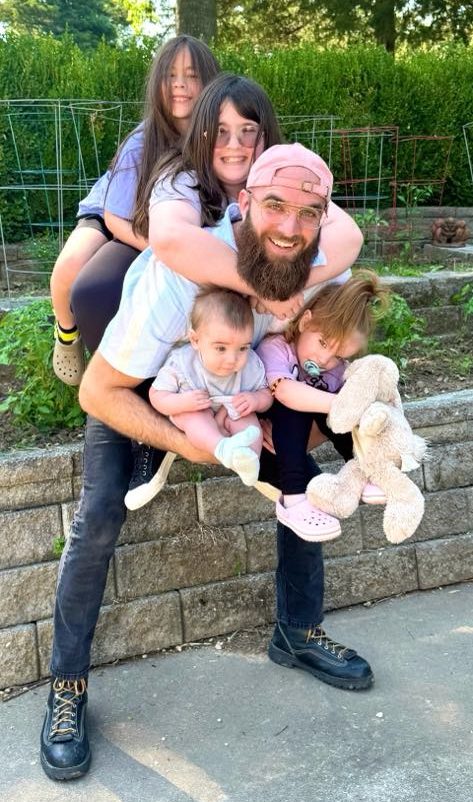
“The goal is to help forests stay resilient through drought, so my kids can still experience them the way I did,” he said.
Walters expects to graduate in 2027 but has plans to pursue a doctorate. His goal is to eventually create a database cataloging mycorrhizal communities in soil.
“There are two types of mycorrhizae: Fast-growth and slow-growth,” Walters said. “The difference between the two is that forests that are more highly associated with the fast-growth, they grew threefold.”
Walters envisions landowners being able to discover which type of mycorrhizae grows on their land. This could allow landowners to influence the fungal communities through management practices. Increasing fast-growth mycorrhizae would subsequently increase the rate at which a forest grows.
“If I can give you a tenth of a change for your forest production, then you can push back the effects of extreme drought and climate fluctuations,” he said.
Walters currently conducts his research at Prairie Fork Conservation Area, which has already funded a grant he wrote about his research. He’s continuing to look for funding to support his research and continued education.
Battling through barriers to make a difference
It wasn’t an easy road that Walters took to arrive at where he is today. After serving in the U.S. Navy on submarines for close to four years, Walters began pursuing his first undergraduate degrees at Mizzou in astronomy and physics in 2017.
But due to certain mental health struggles Walters experienced from his time in the Navy, he chose not to finish his degrees.
“There were a few key events that happened while I was on submarines that led to me being a disabled veteran now,” he said. “That affected my performance in school.”
Walters worked in a kitchen for several years, and as a substitute teacher in elementary and middle schools, before making the decision to go back to school.
“I don’t think that I would have been able to do it on my own without my wife just being able to paint the perspective for me,” he said.
Despite the challenges he has faced, Walters said his family has been the support that’s kept him reaching for his goals.
“My children and my wife have been incredible,” he said.
He also credits his success so far to the faculty’s support at Mizzou’s School of Natural Resources, specifically John Kabrick, an assistant cooperative professor.
“He was one of the very first reasons why I was like, ‘This is a place where people care,’” Walters said.
Through the ups and downs of his life experiences, one thing that has remained constant for Walters is his love for the forest. Through his research, he hopes to pass down that love to future generations.
“Maybe I’ll be able to save the forest for my kids,” he said. “That’s the biggest inspiration I’ve ever had.”