University of Missouri senior Thomas Schwent has known what he’s wanted to do from a young age.
“I’ve wanted to do something with weather and public safety from the time I can remember,” he said.
Schwent is an environmental sciences major with an emphasis in atmospheric science. He said one particular event in his childhood cemented his decision to study the atmosphere. It happened May 31, 2013.
“A large tornado hit my grandparents’ house,” Schwent said. “It had some minor roof damage, but the houses next to them on either side were flattened.”
Schwent said this set into motion an endless queue of questions that continue circulating through his thoughts today.
“From there, I found out that this was something that I was going to continue to have questions about for a very long time,” he said.
The atmospheric science emphasis of his major allows Schwent to understand, predict and communicate what’s happening in the atmosphere.
“We do all the math and physics that you may expect from an engineer,” he said. “We also take some social science, sustainability, communication and human behavior classes.”
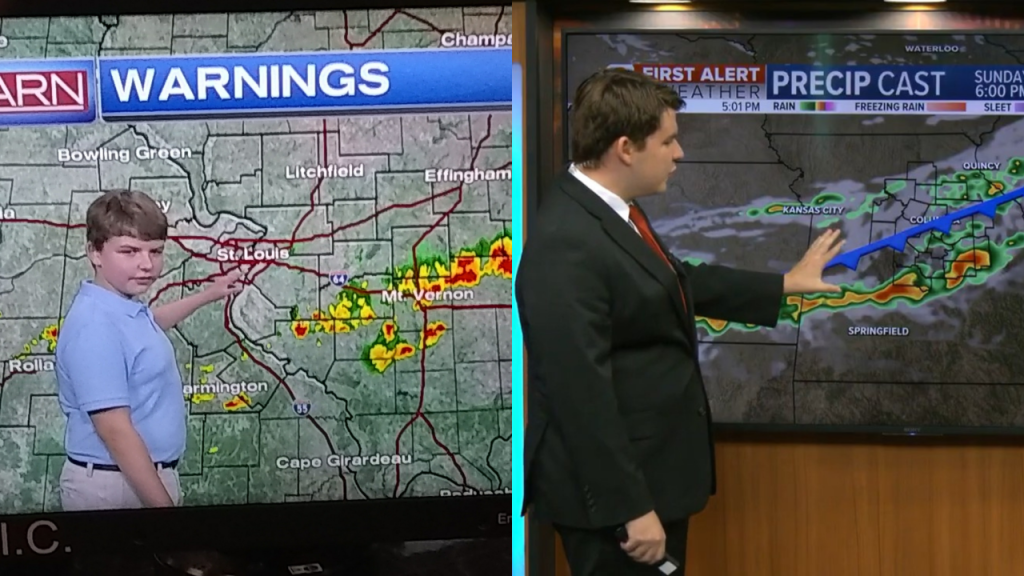
Schwent has had the opportunity to explore different career paths during his time at Mizzou through conducting undergraduate research at the Missouri Climate Center and working as a broadcast weathercaster at KOMU-TV.
“I’ve learned a ton about how to communicate in particular, especially when major weather risks are around,” he said.
Promoting a new era of severe weather preparedness
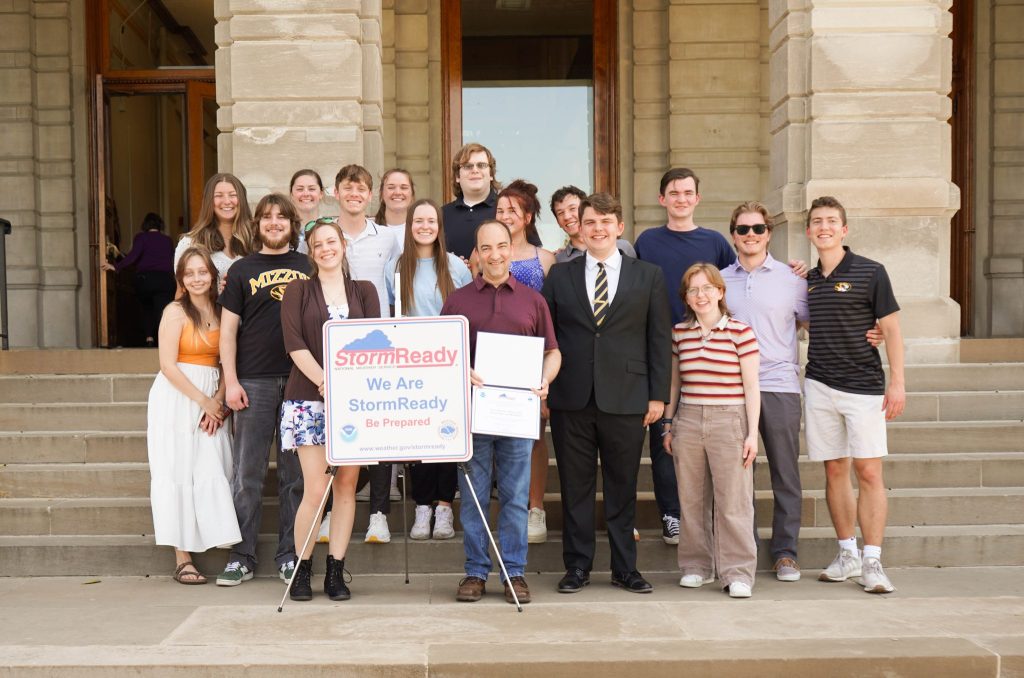
The biggest opportunity Schwent believes he received as an undergraduate student was leading the effort to get Mizzou a StormReady certification from the National Weather Service (NWS).
“I think it’s one of the most rewarding things I’ve ever done in my life,” he said.
StormReady is a federal certification the NWS gives to universities that make efforts to not only prepare their buildings and infrastructure for severe weather, but also prepare the general population. It’s an exclusive designation that only seven of Missouri’s colleges or universities have.
“My first reaction was, ‘Yes, this is what I’ve been wanting,’ and, ‘Oh dear Lord, now I actually have to do it,’” Schwent said.
Schwent collaborated with different departments across campus and Boone County, including CAFNR, Mizzou Housing and the Boone County Office of Emergency Management.
“We had to make sure we had storm shelter signage around different buildings, make sure weather radios were up, make sure our MU Alert infrastructure was up to pace and make sure to hold multiple NWS outreach events every year to maintain that certification,” he said.
A future full of ambitions
After Schwent graduates in May, he plans on attending Northern Illinois University to pursue a master’s in meteorology.
“I want to be the bridge between academia and those making the forecast people see at home,” he said. “Allowing forecasters to take the latest and greatest and turn it into tools they can use.”
Reflecting on what he’s learned throughout the past four years, Schwent said it’s often easy to get in your own way.
“I think a lot of times we shut down our own big ideas because we think that they may not go well or we don’t have the means to do them,” he said.
But he attributes everything he’s accomplished to the support of the students and faculty he’s worked with and learned from in CAFNR.
“I don’t think I’ve ever had someone who’s been like, ‘You’re crazy, you can’t do this,’” Schwent said. “It’s a very supportive group and I’m very lucky to be a part of it.”