Editor’s note: Congratulations to India, who placed 12th in the world.
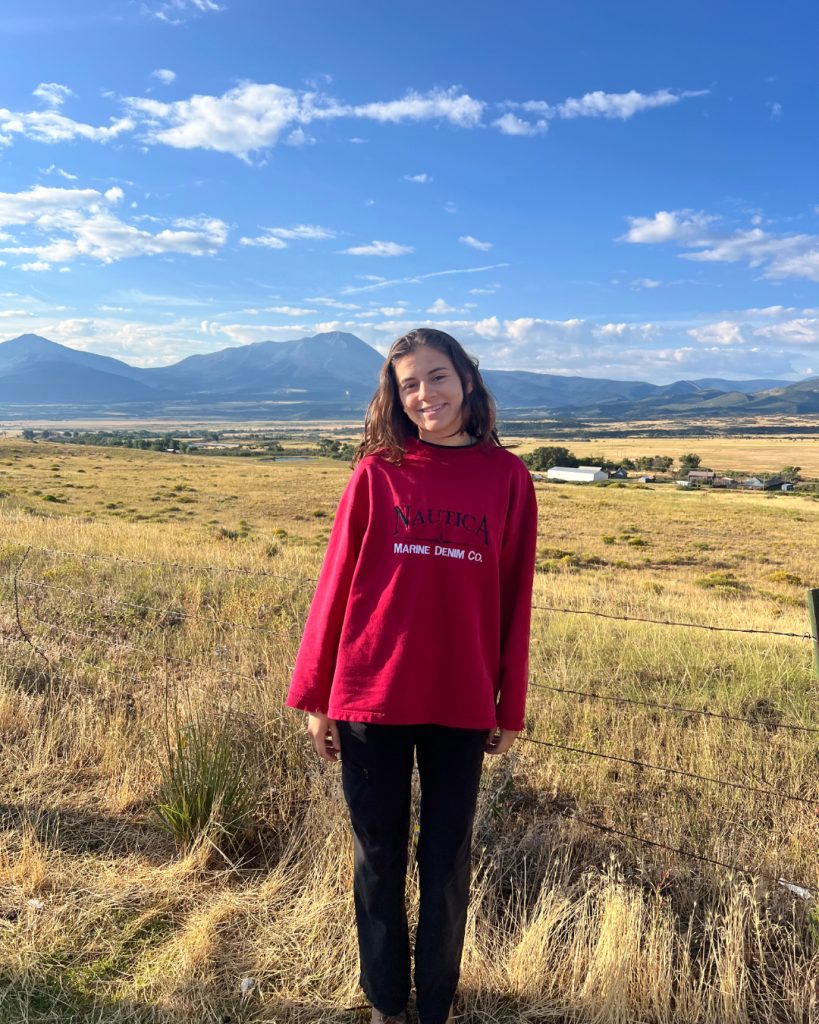
India Williams’ passion and talent for soil judging have earned her a spot on the world stage.
“I’m excited to see how people around the world handle soil science,” she said.
Williams graduated in May and received a Bachelor of Science in Environmental Sciences with an emphasis in land and soil at the University of Missouri. She will travel to Nanjing, China to compete on the U.S. soil judging team at the fifth International Soil Judging Contest. The event takes place June 2-6.
“I love learning new characteristics about soils,” Williams said. “I’m imagining that the soils in China are going to be pretty different.”
Her individual results at the 2026 National Collegiate Soil Judging Competition opened the door to this one-of-a-kind opportunity. She traveled with Mizzou’s Soil Judging team to North Carolina for the competition in March.
“I was surprised, honestly. I wasn’t familiar with North Carolina soils at all,” Williams said. “I don’t think anyone on our team was, so it was surprising that we placed that high.”
Williams received second place as an individual, and Mizzou also received second place as a team.
“I’m obviously happy about my individual score, but I’m really happy that I was able to contribute to the group score,” she said.
The individuals who place in the top eight at the national competition are offered the opportunity to compete in the international contest, which happens every four years.
“I’ll be competing against a bunch of different countries,” Williams said. “The U.S. won the last one, so hopefully we’ll continue that streak.”

Digging deep: Discovering a passion for soil analysis
Soil analysis became an important part of Williams’ life almost immediately after becoming a student at Mizzou.
“I feel like I picked the land and soil emphasis randomly, but I’ve been interested since my very first class,” she said. “I most recently realized that this is a career path that I want to pursue for the rest of my life.”
Williams joined Mizzou’s Soil Judging team during the spring semester of her freshman year. She’s traveled across the country to compete with the team, analyzing soil in places from California and Texas to South Dakota and North Carolina.
“My favorite part is that I’ve gotten to see so many different soils,” Williams said.
The practice of classifying soil takes place in pits that are dug several feet into the ground. The process includes first analyzing the horizons in the pit, which means marking the changes in soil characteristics as the layers go deeper into the ground.
“For each of the horizons, you’ll decide the morphology, which is the physical characteristics of the soil,” she said. “You look at color, texture, wetness, stuff like that.”
Then, Williams said her and her teammates will analyze those differences and try to figure out why those changes are happening to decide the classification of the soil.
“It’s like a cool puzzle, trying to figure out how those different horizons might have happened, how the landscape might have impacted these soils,” she said.

Beneath the surface of soil analysis
Soil classification is key to several processes that impact everyday life. From serving as a foundational step in construction and agriculture to being an important indicator of environmental health, having experts who can analyze soil is extremely important.

“One of the main reasons for classifying soils is to make sure that they’re stable, that they’re right for what you’re trying to build there,” Williams said. “There are certain soils where if you build a basement in a high clay environment, for example, it could cause your basement to cave in.”
Another big part of the soil analysis industry is advocacy. Williams said many soil scientists push for measures to help protect soil, which is the area she wants to pursue in her career.
“A lot of the things that we’re doing as humans are having insane impacts on the soil,” she said. “Being able to understand those differences is very important.”
Williams works for an engineering consulting firm that manages landfills. Her job focuses on making sure landfills follow EPA regulations.
“What I’ll be doing there is applying my soils background to make sure that the soil is compacted enough to stop the landfill from leaking into the environment and into the groundwater,” she said.
Williams said she’s grateful for her academic experience within CAFNR, and how it introduced her to the field she’s fallen in love with.
“Within environmental sciences, you have to find your niche,” she said. “I’ve definitely found that.”