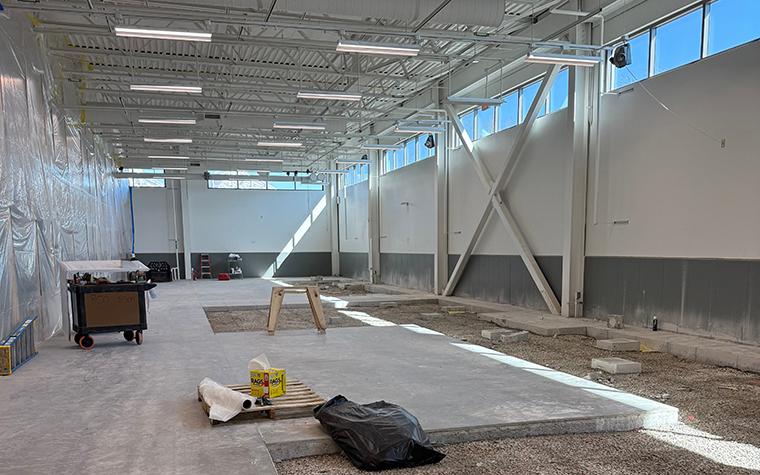
COLUMBIA, Mo. – Construction is underway on the new Soybean Cyst Nematode Diagnostics Lab at the University of Missouri, with completion expected by July 2026. Work on the facility began in late February.
Operated in partnership with MU Extension and the MU College of Agriculture, Food and Natural Resources, the lab delivers high-quality plant and nematode screening for the biotech industry, researchers and farmers, said Mandy Bish, who has directed the lab since 2023 and is MU Extension’s state plant pathologist.
The Missouri legislature allocated $2 million in the FY2026 budget to upgrade the lab. The Missouri Soybean Association collaborated with legislators and Gov. Mike Kehoe to secure funding, which will strengthen the university’s longstanding leadership in soybean cyst nematode (SCN) research and diagnostic testing.
Beyond its focus on soybeans and SCN, the facility provides essential nematode testing for Missouri government agencies, homeowners and gardeners and offers hands-on training for undergraduates from across the state.
The new facility will help researchers advance SCN management, an issue that costs Missouri farmers an estimated $250 million annually. “Demand for research on SCN is high,” she said, noting that the lab’s workload has doubled in recent years.
A recent statewide survey conducted by MU doctoral student Jefferson Barizon shows that SCN causes an average 9% yield loss in Missouri soybeans and now affects 80% of the state’s soybean fields.
“SCN can cause substantial yield losses without obvious symptoms, which makes regular soil testing and monitoring essential for management,” said Barizon.
Soybean cyst nematode is a microscopic pest that attacks soybean roots, reducing the plant’s ability to take up water and nutrients. This can result in significant yield losses without any obvious above-ground symptoms to the plants, which makes diagnostic soil and plant sampling a key aspect of detection. First identified in North America in 1954, SCN is now the top yield-limiting pathogen in soybeans and is present in nearly every soybean-producing county in the U.S. and Canada, except in West Virginia and Prince Edward Island.
Located in MU’s East Campus Plant Growth Facility, the new clinic will be approximately 3,200 square feet. The design includes dedicated zones for handling and processing before transitioning into a “clean zone” equipped for microscopy and molecular diagnostics.
Modernization will streamline processes to deliver results more efficiently, improve molecular testing capabilities, and create hands-on opportunities for students and researchers, Bish said.
In addition to updating aging infrastructure, the new clinic will support Missouri’s $94 billion agriculture economy through plant phenotyping and modernized workflows, she said.
Bish commended the Missouri Soybean Association for working closely with the state legislature to secure funding. “The association recognized the need for upgraded facilities and MU’s rich history in nematology,” she said.
“This project represents years of farmer-driven advocacy and collaboration,” said Casey Wasser, CEO and executive director of the association. “The importance of this lab and its dedicated staff, working on behalf of Missouri soybean farmers, cannot be overstated. Investing in a modern nematode clinic strengthens Missouri’s ability to address soybean cyst nematode and other yield-limiting challenges while delivering practical research and diagnostics that directly benefit farmers across the state.”
“This new SCN Diagnostics Lab is a major step forward for Missouri farmers and for the future of soybean production in our state,” said Rob Kallenbach, associate dean for extension in the MU College of Agriculture, Food and Natural Resources. “By modernizing this facility, we are improving our ability to deliver timely diagnostics, support applied research and train the next generation of agricultural professionals. This is exactly the kind of investment that helps MU Extension turn science into practical solutions for producers.”
For more information, contact the lab at 573-884-9118 or scndiagnostics@missouri.edu, or visit the SCN Diagnostics website.