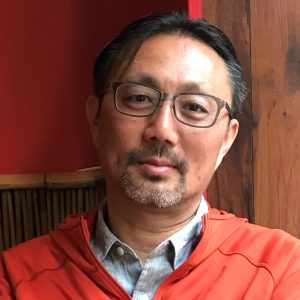
Chung-Ho Lin, research professor, School of Natural Resources (SNR), and Bioremediation and Phytochemistry Program, University of Missouri Center for Agroforestry (UMCA), was surprised with CAFNR’s 2026 Mumford Award for Outstanding Faculty as part of the annual Celebration of Excellence awards ceremony April 23. Sponsored by the CAFNR Foundation, the Mumford is the college’s signature award and named for a ground-breaking former dean.
Lin cares deeply for people and community, said Ron Revord, UMCA director. He excels at interdisciplinary work with a societal benefit, thinking outside of the walls of the department and pursuing the “true spirit of scientific discovery,” said doctoral student Ruth Williamson. He values deep mentoring relationships, curating graduate school experiences based on students’ interests and career goals.
“Each student from his lab comes away with a unique set of skills that sets them up to fill a gap in research and be a highly competitive candidate,” Williamson said.
His research areas include bioremediation, wastewater surveillance and metabolite-driven natural product development (novel food, medicinal and cosmetic product development). Since his faculty appointment in 2005, Lin’s programs have published more than 110 journal articles and 10 invention disclosures (8 awarded patents), and been awarded more than $38 million in funding. His lab spun off Elemental Enzymes, a company run by former students and valued at over $100 million. Lin’s honors include National Academy of Inventors Senior Member, the USDA Forest Service Chief’s Honor Award and the Governor’s Award for Quality and Productivity.
“At his core, Dr. Lin is intellectually curious and has an un-ending quest for discovery with the greater good firmly mapped out in his end game,” said nominator Patrick Market, director SNR. “His humanity for the work and the people he works with drive him at a pace that others find difficult to keep. To define Dr. Lin’s work as ‘having impact’ is not a big enough concept.”