McKenna Kramer knows what it’s like to be a student athlete. Balancing training and course work while making sure you’re fueling your body properly isn’t easy, but it’s important.
“I definitely know a bit of that athlete lifestyle of making sure you’re hitting nutrition goals,” she said. “It can be hard when you’re that busy.”
As a sophomore studying Nutrition and Exercise Physiology with an emphasis in Nutrition and Foods at the University of Missouri, Kramer started her college experience differently. She ran cross country and track at the University of Missouri-St. Louis for two years before transferring to Mizzou.
“I was originally a business major when I first got to college,” Kramer said. “I wanted to start my own business with nutrition, but then I was like, ‘Wait, I’ll just study nutrition instead.’ I didn’t even know it was a major.”
Kramer’s decision to pursue a degree in nutrition is what led her to Mizzou – the place where she found her passion.
“It kind of pushed me back in graduation a little bit, but it ended up being worth it because I know what I want to do now,” she said.
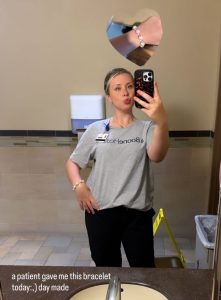
The unique, hands-on experiences Kramer has received as a CAFNR student have shaped her goals for the future.
“There are just a lot of opportunities to get involved here,” she said. “I feel like there are endless things to get involved in.”
From being an intern at Boone Hospital over the summer where she helped patients meet their nutrition needs, to interning with Mizzou Athletics, Kramer is exploring different career paths.
“I still don’t know where I want to go with my nutrition degree, but I knew this would be a good opportunity to dip my toes in the water and see if I like this,” she said.
Kramer currently works with the Mizzou football team to help them train during the spring season.

“We get to make all the guys their protein shakes and supplements,” she said. “Restock all their snacks, food, drinks, stuff like that.”
Interns for Mizzou Athletics work with two full-time dieticians on staff. Kramer said it’s been eye-opening to see how much they do for the athletes.
“They keep the whole thing going,” she said. “They’re really needed.”
Being a dietician is a career Kramer wants to pursue as she prepares to apply for the dietetics program next year.
“It’s a five-year thing,” Kramer said. “You get your undergrad and grad school done in five years, which is amazing. It saves a lot of money.”
In the meantime, Kramer is grateful she gets to work alongside dieticians, who have ignited her passion for following in their footsteps – whether she works to help patients in the hospital or athletes on the field.
“It’s cool to see how much they really do; how much they really put into it,” she said. “It’s really impressive to see that and it’s something I totally want to be a part of one day.”