Biochemistry
Sep. 2, 2019
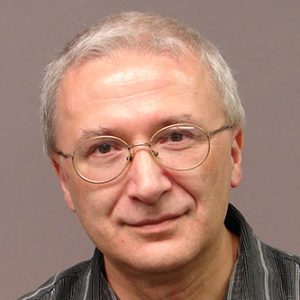
Valeri Mossine
Educational background…

Sep. 2, 2019
Thomas J. Reilly, PhD
Educational background…

Sep. 2, 2019
Thomas P. Quinn
We have an established research program to develop radiolabeled peptides, proteins and nanoparticles as tumor specific diagnostic and therapeutic agents. Combinatorial peptide and antibody fragment libraries are being employed to identify molecules that preferentially bind tumor antigens. The tumor-avid peptides, antibody fragments and nanoparticles are subsequently engineered to bind the medically important radionuclides into their structures. Finally, the radiolabeled peptides, proteins and nanoparticles are investigated for their abilities to target tumor cells in vitro and in vivo in support of eventual clinical translation. Radiolabeled Melanoma avid α-MSH Peptide Analogs: The goal of this project is to design radiolabeled…

Sep. 2, 2019
Douglas D. Randall, PhD
Education BS Chemistry South Dakota State University Brookings, S.D. PhD Biochemistry Michigan State University East Lansing, Mich. Research Area Metabolism, signal transduction, protein kinases and phosphorylated proteins in plants. Research Description Randall is retired and no longer accepting graduate or postdoctoral students and his research program has ended. Our group studied regulation of metabolism in plants, in particular, the pyruvate dehydrogenase complex (PDC) as a primary site at which photosynthetic carbon metabolism interacts with mitochondrial respiration and photorespiration. The regulation of this multienzyme complex has several layers including covalent modification by reversible phosphorylation (inactivation/deactivation). The regulation of the pyruvate dehydrogenase complex…

Sep. 2, 2019
Michael J. Petris
The micronutrient copper (Cu) is essential for several key enzymatic processes involved in energy generation, protection against reactive oxygen species, formation of blood vessels, immune function, and healthy functioning of the central nervous system. This nutrient is able to exist in two oxidation states Cu1+ and Cu2+, and participate in the generation of reactive oxygen species. A delicate balance of copper homeostasis must be maintained to provide sufficient levels of this nutrient, while preventing toxic build up. Copper and Cancer Recent evidence suggests that copper plays a key role in tumor growth because this metal…

Sep. 2, 2019
Krishna K. Sharma, PhD
Education BS Biology/Chemistry University of Mysore India MS Biochemistry University of Mysore India PhD Biochemistry University of Mysore India Research Areas Structure-function of crystallins, role of ocular proteases and molecular basis for cataract development. Research Description The lens of the eye is an excellent model for studying the effects of aging. The lens is primarily composed of long-lived highly stable proteins called crystallins. The crystallins account for approximately 95% of lens proteins. There are three types of lens crystallins: alpha, beta and gamma. The normally transparent lens often gradually becomes cloudy with aging, leading to cataract formation. Cataract is a…

Sep. 2, 2019
Brian Mooney
I am particularly interested in protocol and technology development for proteomics and mass spectrometry. We use mass spectrometry for protein identification, protein/peptide quantitation, and mapping sites of post-translational modifications and protein-protein interactions. Metastable Crystallins: Structure and stabilization (NEI-NIH award R01EY023219) Cataract and a host of other diseases result from abnormal interaction of proteins in the cells. The goals of this research are to understand lens protein aggregation in cataract formation and to develop and test lens protein alpha-crystallin-derived peptide as active mini-chaperones capable of suppressing protein aggregation. Understanding the structural changes in mutant proteins associated…

Sep. 2, 2019
Bruce A. McClure
Research in the McClure lab is focused on understanding how pollen pistil communication controls plant mating. We study S-RNase-based self-incompatibility in Nicotiana and interspecific pollen recognition and rejection between tomato and its wild relatives. The genus Nicotiana is useful because of its ease of experimental manipulation, and the inter- and intra-specific compatibility relationships are well known. For example, N. alatadisplays gametophytic self-incompatibility (SI). Self-pollen and pollen from closely related plants are rejected, thus maintaining hybrid vigor. N. alata also has specific mechanisms for recognizing and rejecting pollen from related species such as N. plumbaginifolia and N. tabacum. Likewise, tomato, Solanum lycopersicum (formerly Lycopersicon esculentum), also has well defined crossing relationships…

Sep. 2, 2019
Xiaoqin Zou
The molecular interactions that drive ligand-protein binding are a key to quantitatively understanding the basis of molecular recognition and to designing therapeutic interventions through rational drug design. Drug molecules usually act by binding to specific target proteins. Drug candidates that have high binding affinities can be identified by their geometric and chemical complementarity to the target in a process analogous to solving a “jigsaw puzzle”, if the target structure is known. An energy model that can give rapid and accurate evaluation of the molecular interaction strength is thus essential for selecting plausible candidate compounds from a chemical database consisting…

Feb. 20, 2019
Bill Folk
Educational background Courses taught…